
Open almost any Japanese recipe for teriyaki, sukiyaki or simmered fish and sake sits near the top of the ingredient list. If you don’t use alcohol, that single line can stop you before you start.
You don’t have to give up the dish, though. The easiest way to find a sake substitute for halal cooking is to ask what the sake was doing in the recipe. Was it hiding a fishy smell? Adding sweetness? Building savory flavor? Replace that job, and the dish still works.
Short answer: For soups, steamed dishes and thin sauces, use water or dashi. For marinades, mix 1 tablespoon of rice vinegar with 3 tablespoons of water for every ¼ cup of sake. For sweeter dishes like teriyaki, try white grape juice with a squeeze of lemon, or a mirin-style seasoning that is labeled alcohol-free.
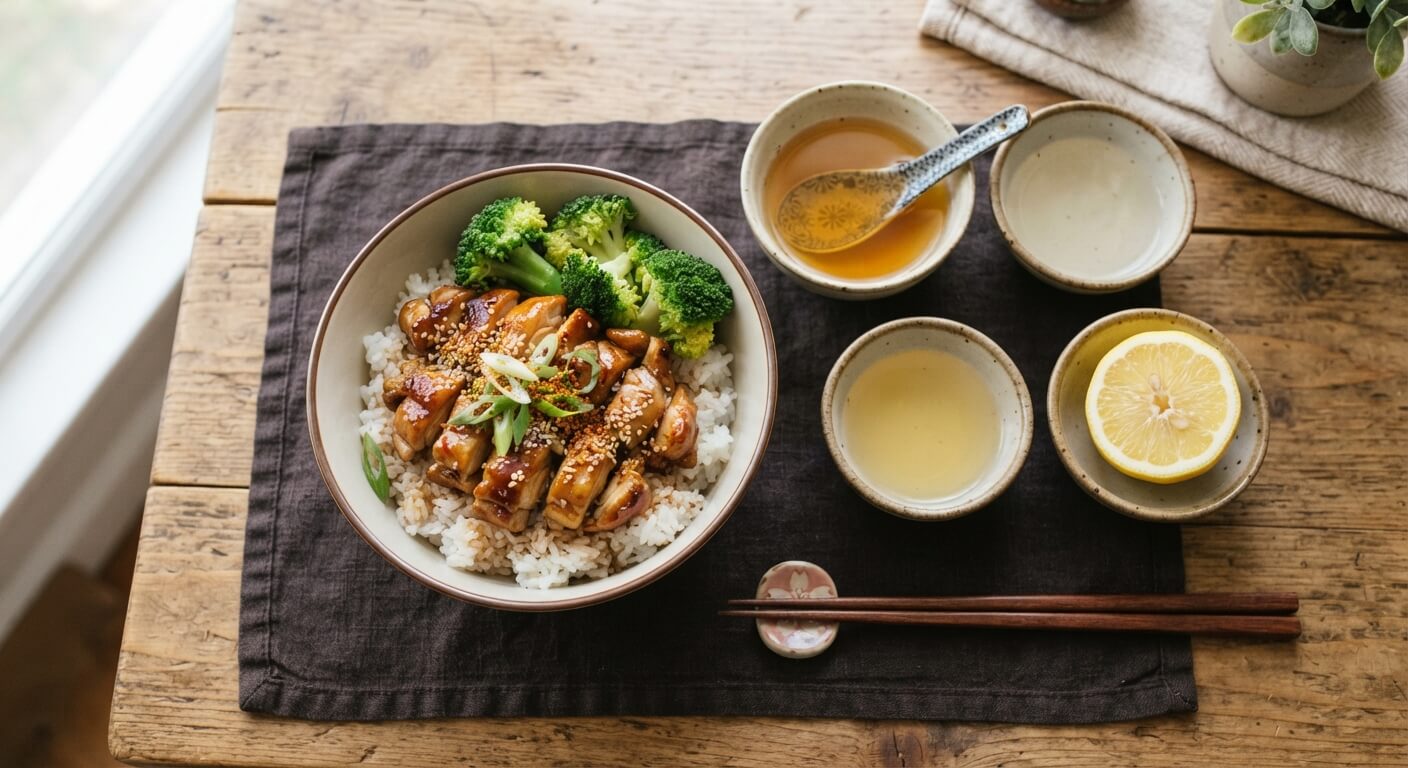
Why sake is not halal, and where mirin fits
Sake is a Japanese drink made from fermented rice. Just One Cookbook says it is brewed more like beer than wine. The starch in the rice turns into sugar, and then the sugar ferments into alcohol. Drinking sake has roughly 12 to 15 percent alcohol.
Indonesia’s halal certification body, LPPOM MUI, treats both sake and mirin as khamr, the Islamic term for intoxicants. It does not certify products that imitate them. It also says the amount does not matter, so even a small splash for seasoning is not allowed.
Is mirin halal?
Traditional mirin is not halal either. Hon-mirin, the authentic kind, is a sweet rice wine with about 14 percent alcohol. Just One Cookbook puts the range for mirin products at roughly 1 to 14 percent.
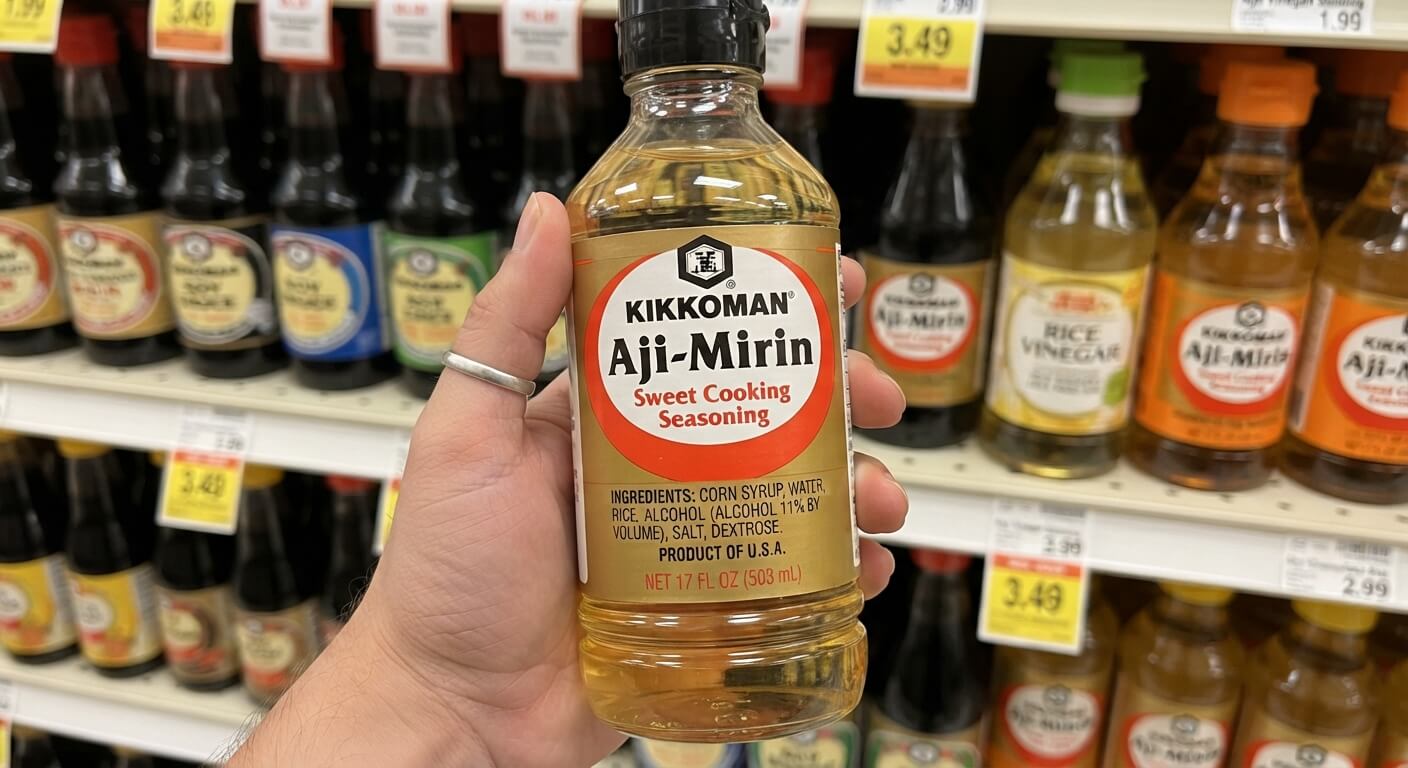
Then there are bottles labeled “aji-mirin” or “mirin-style seasoning.” Bokksu Market says aji-mirin has under 1 percent alcohol. That is low, but it is not zero. Mizkan’s Honteri shows how much labels can differ. Mizkan’s US site calls it non-alcoholic. Some UK sellers list it at 0.12 percent alcohol, and Mizkan’s UK foodservice booklet says less than 0.5 percent. The same product can be made differently in each country, so read the label on the bottle in your hand.
What sake actually does in a recipe
Just One Cookbook lists several jobs that sake does at once:
- It softens strong smells in meat and fish.
- It keeps proteins moist and helps tenderize them.
- It adds a little sweetness and a pleasant aroma.
- Fermentation gives it amino acids, which deepen the savory taste (umami).
No alcohol-free ingredient does all of that. If you skip sake, Just One Cookbook says the dish loses some aroma and umami, and water or dashi gives a lighter result. So pick the substitute that matches the job your dish needs most. A fish marinade needs odor control. A teriyaki glaze needs sweetness. A simmered dish needs savory depth.
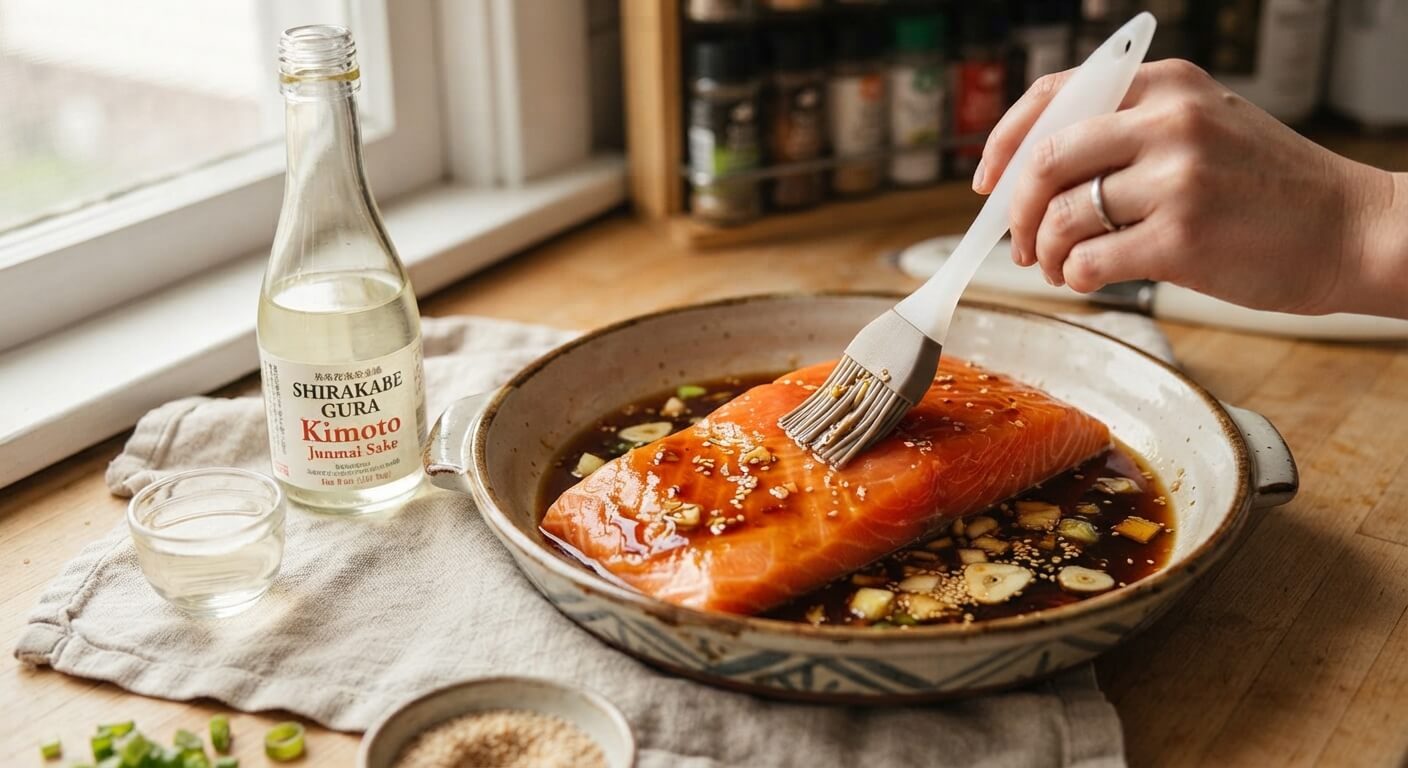
7 alcohol-free sake substitutes and how to use them
1. Water or dashi
This is the simplest swap. Just One Cookbook recommends water or dashi, especially for steaming and for sauces. Use the same amount the recipe asks for in sake. Pick dashi if you can, because it adds a savory note that plain water doesn’t.
Best for: steamed dishes, soups, thin sauces.
2. Rice vinegar mixed with water
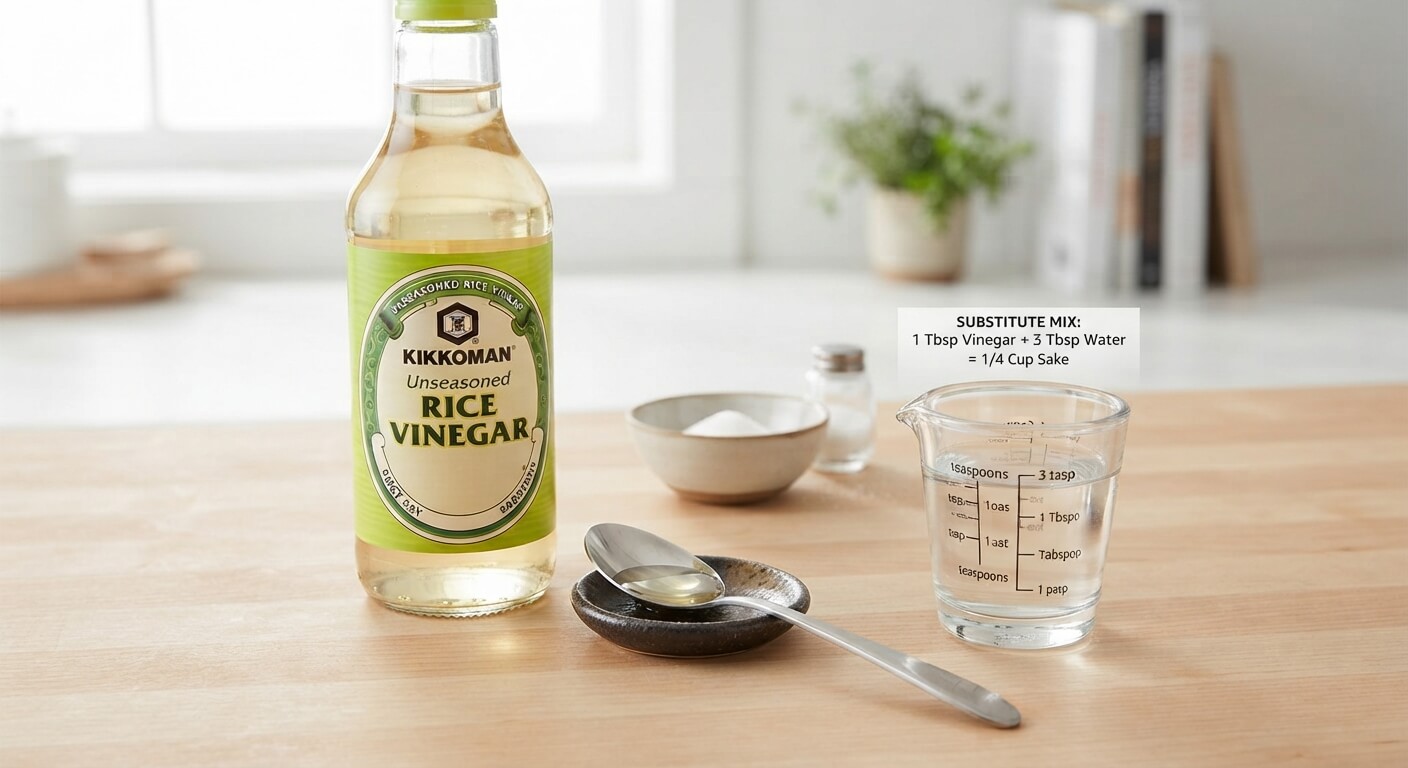
A Couple Cooks suggests mixing 1 tablespoon of rice wine vinegar with 3 tablespoons of water to replace ¼ cup of sake. Buy unseasoned rice vinegar. The seasoned kind has sugar and salt added.
Think of this as a way to add brightness, not a perfect match. Just One Cookbook notes that rice vinegar is sour and does a different job than sake or mirin. A small amount works better than a large one.
Halal readers often ask whether vinegar is allowed, since it starts as alcohol. The European Council for Fatwa and Research ruled that vinegar is halal and pure, even when it is made on purpose, because turning alcohol into vinegar removes the intoxicating quality. IslamQA notes that scholars from several schools disagree about vinegar made through deliberate treatment. If you follow the stricter view, choose a halal-certified vinegar or use another option from this list.
Best for: marinades and dipping sauces where a little tang is welcome.
3. White grape juice with lemon
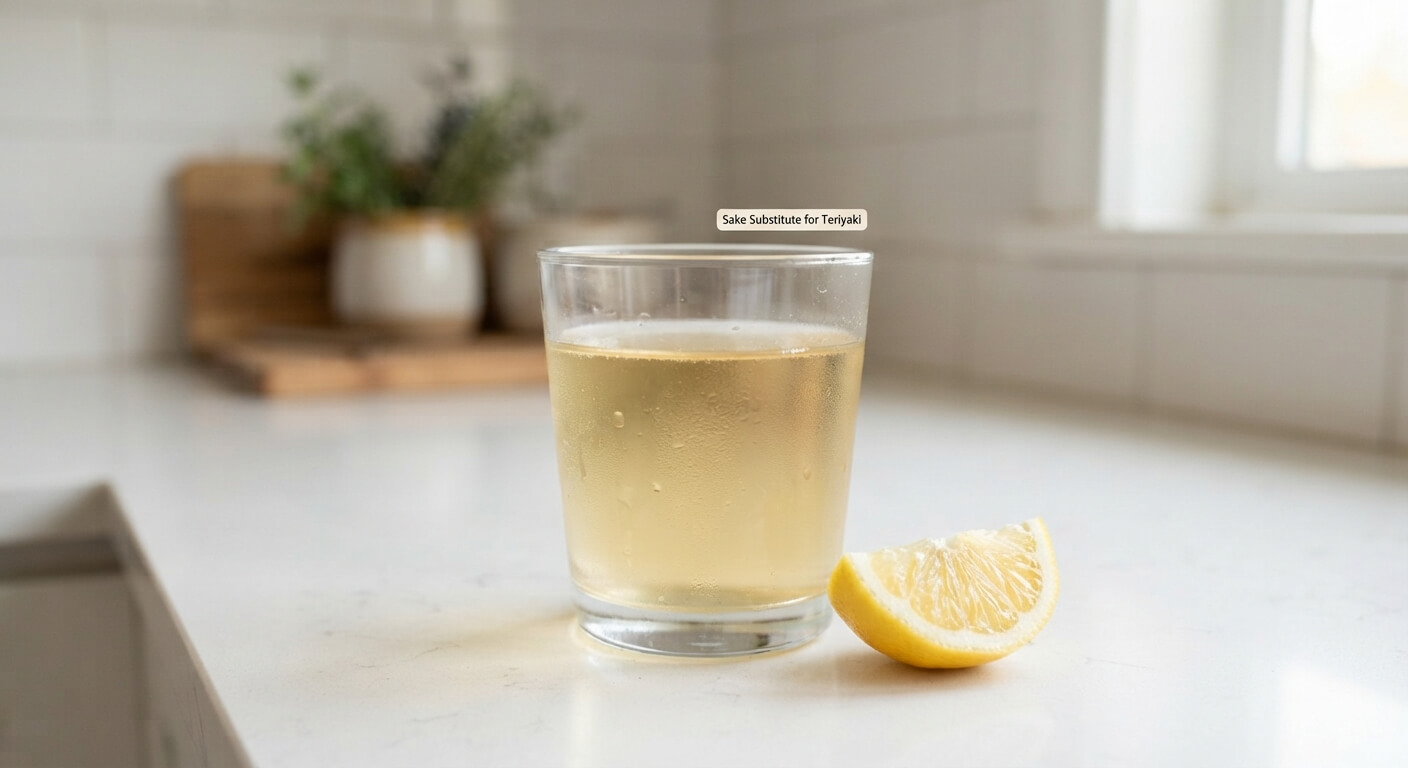
White grape juice gives the mild sweetness that sake adds, which is why cooks often use it as an alcohol-free swap. It is sweeter than sake, so cut back on any sugar in the recipe. A small squeeze of lemon brings back some sharpness.
A fair place to start is the same amount of juice as the sake the recipe asks for. Then taste and adjust. That ratio is a starting suggestion, not a tested conversion.
Best for: teriyaki sauce, glazes, sweet simmered dishes.
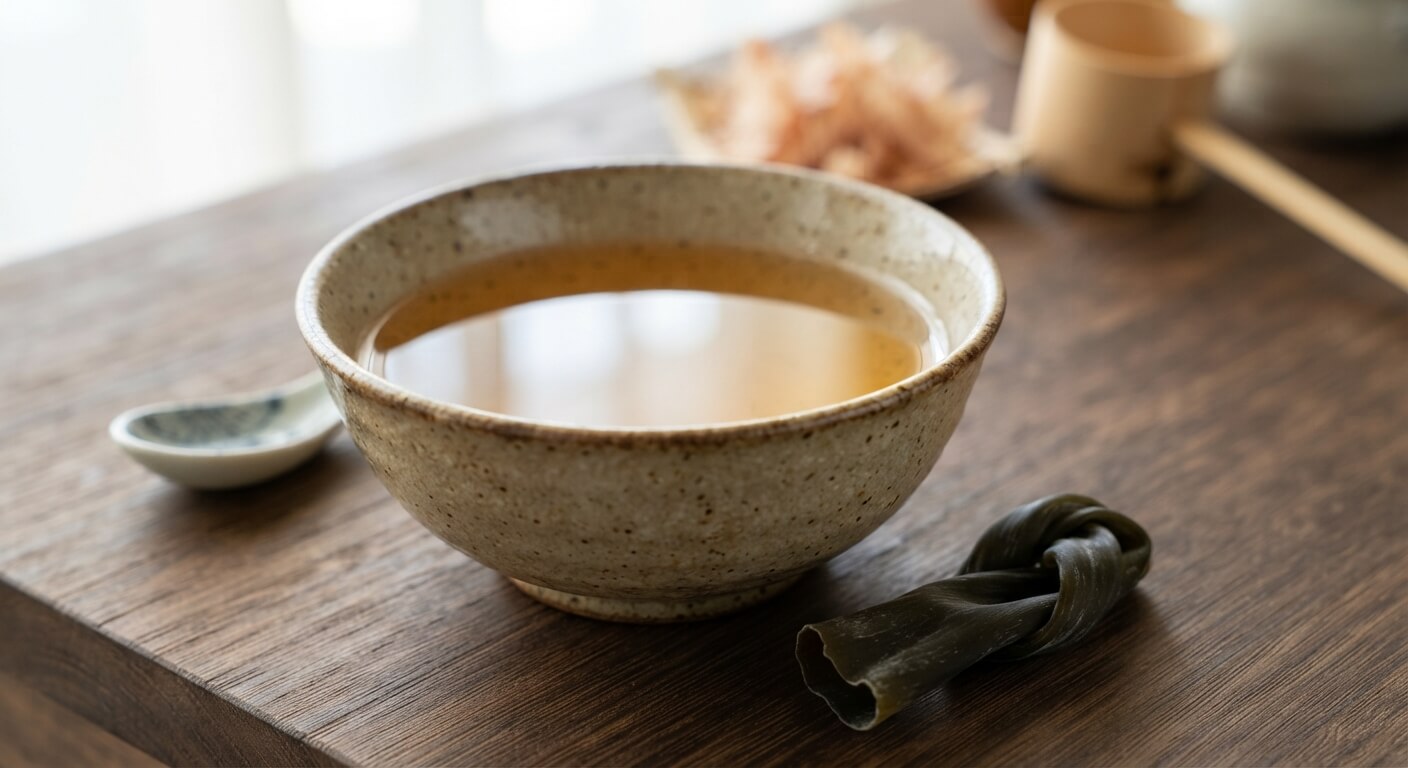
4. Kombu dashi with a pinch of salt
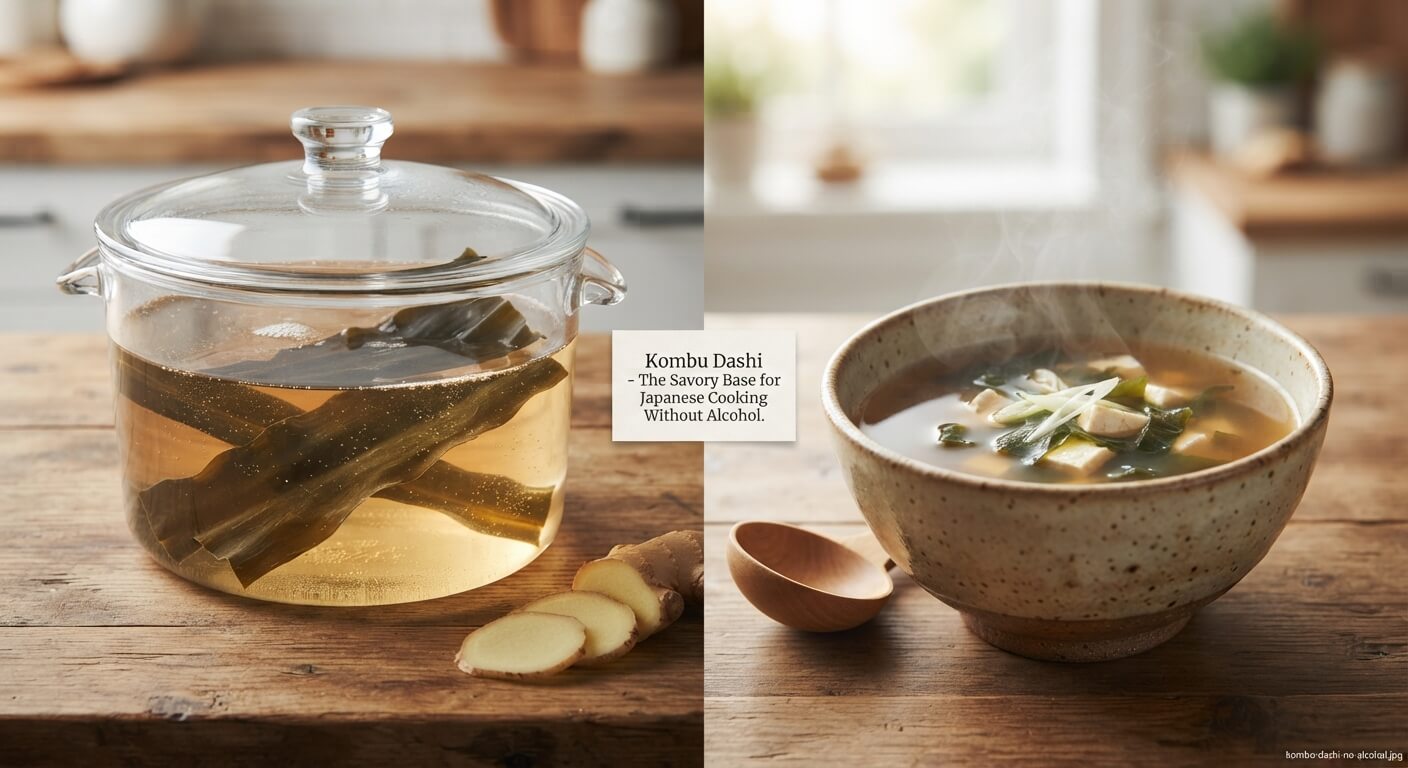
Sudachi Recipes suggests kombu dashi with a little salt as an alcohol-free stand-in. It adds flavor with no alcohol at all. If you are cooking fish, add a bit of ginger to handle the smell.
Best for: miso soup, simmered vegetables, tofu dishes.
5. Lemon juice or fresh ginger
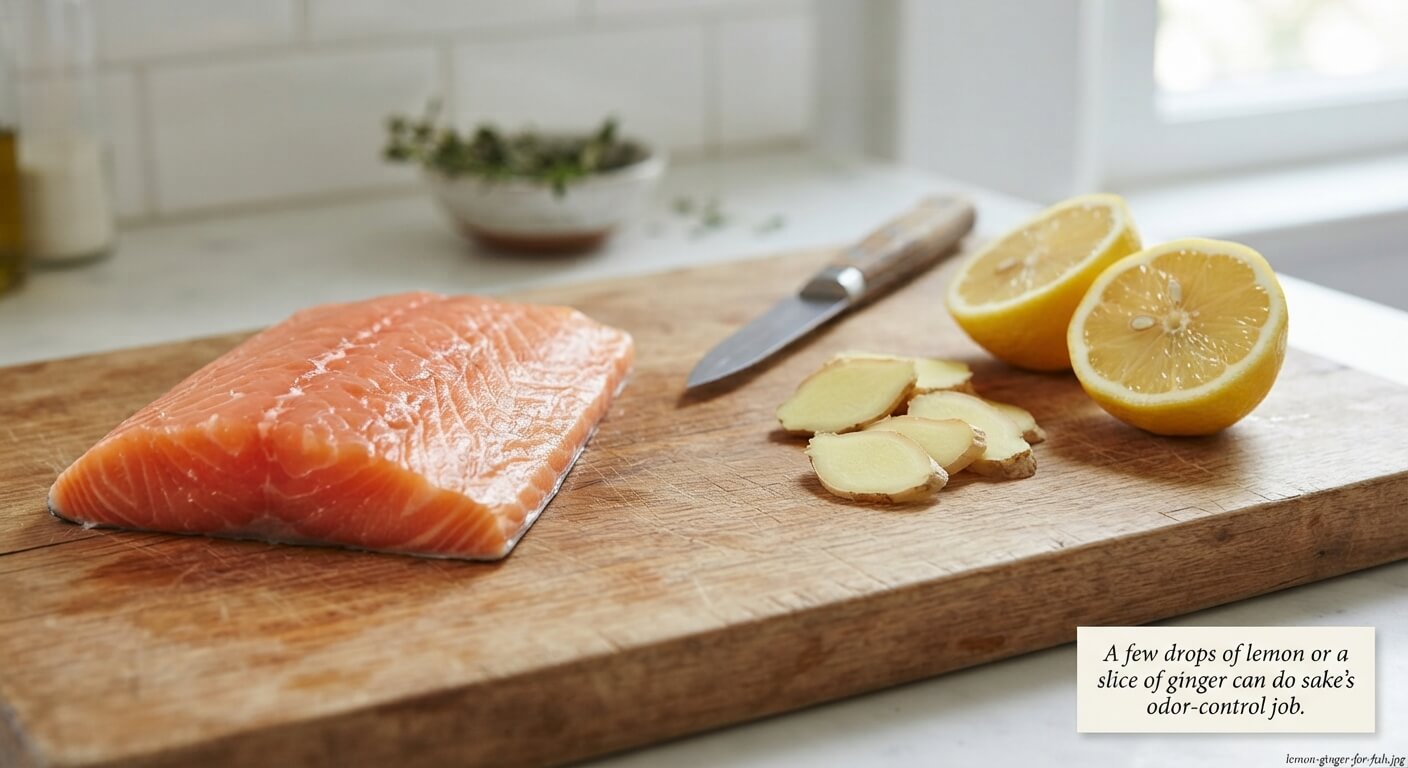
Cooks use sake to get rid of fishy smells. LPPOM MUI points to this same job and suggests lemon for fish. A few drops of lemon juice or two thin slices of ginger will do it. Neither one adds sweetness or umami, so pair them with dashi.
Best for: fish and seafood marinades, some meat dishes.
6. Verjus
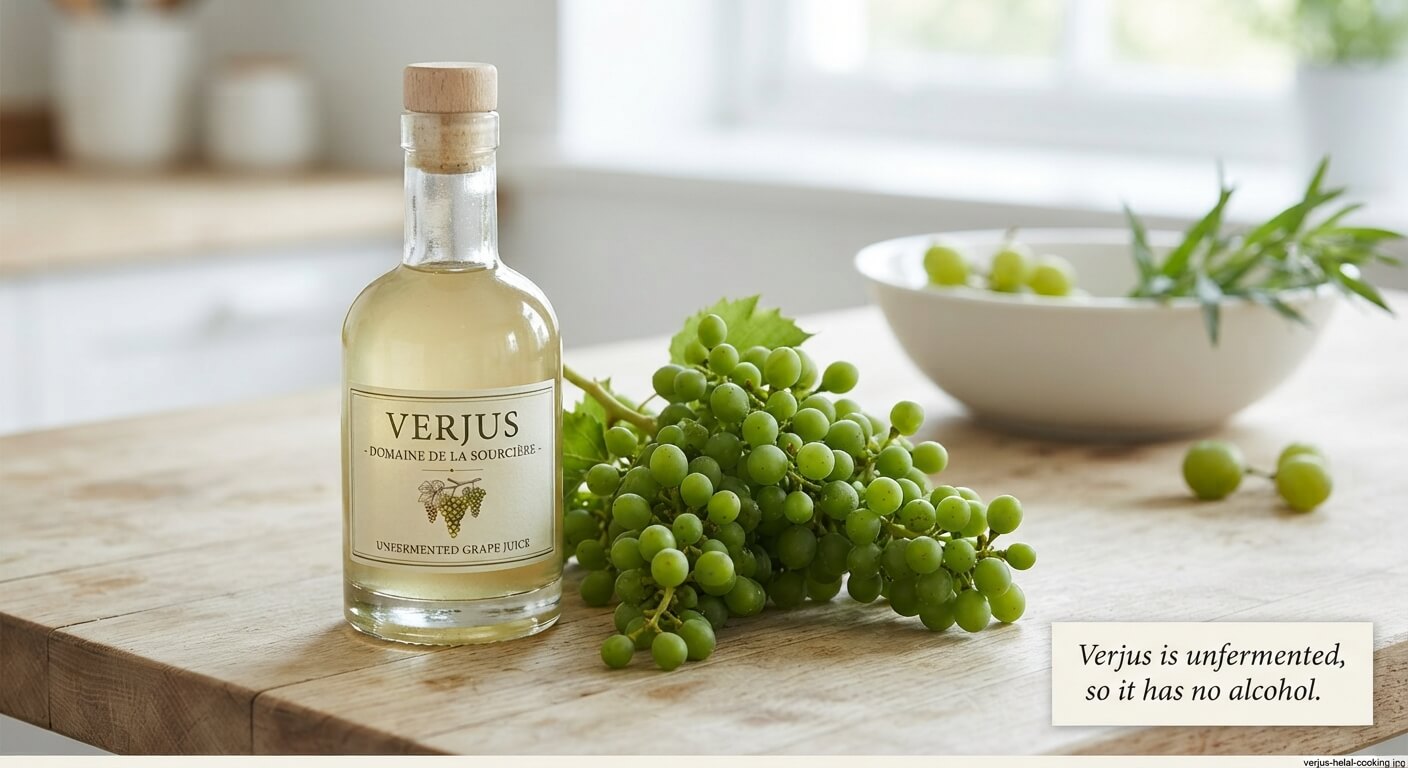
Verjus is the juice of unripe grapes. It is pressed and bottled without fermenting, so it has no alcohol. The taste is sour with a little sweetness. Sous Chef calls it unfermented wine and says to use it where you would use white wine. It is sharper than grape juice, so mixing it with some water makes sense (my suggestion; adjust to taste).
Verjus can be hard to find. Try specialty food shops or order it online.
Best for: sauces and marinades that need a bright, wine-like sourness.
7. Alcohol-free mirin-style seasoning
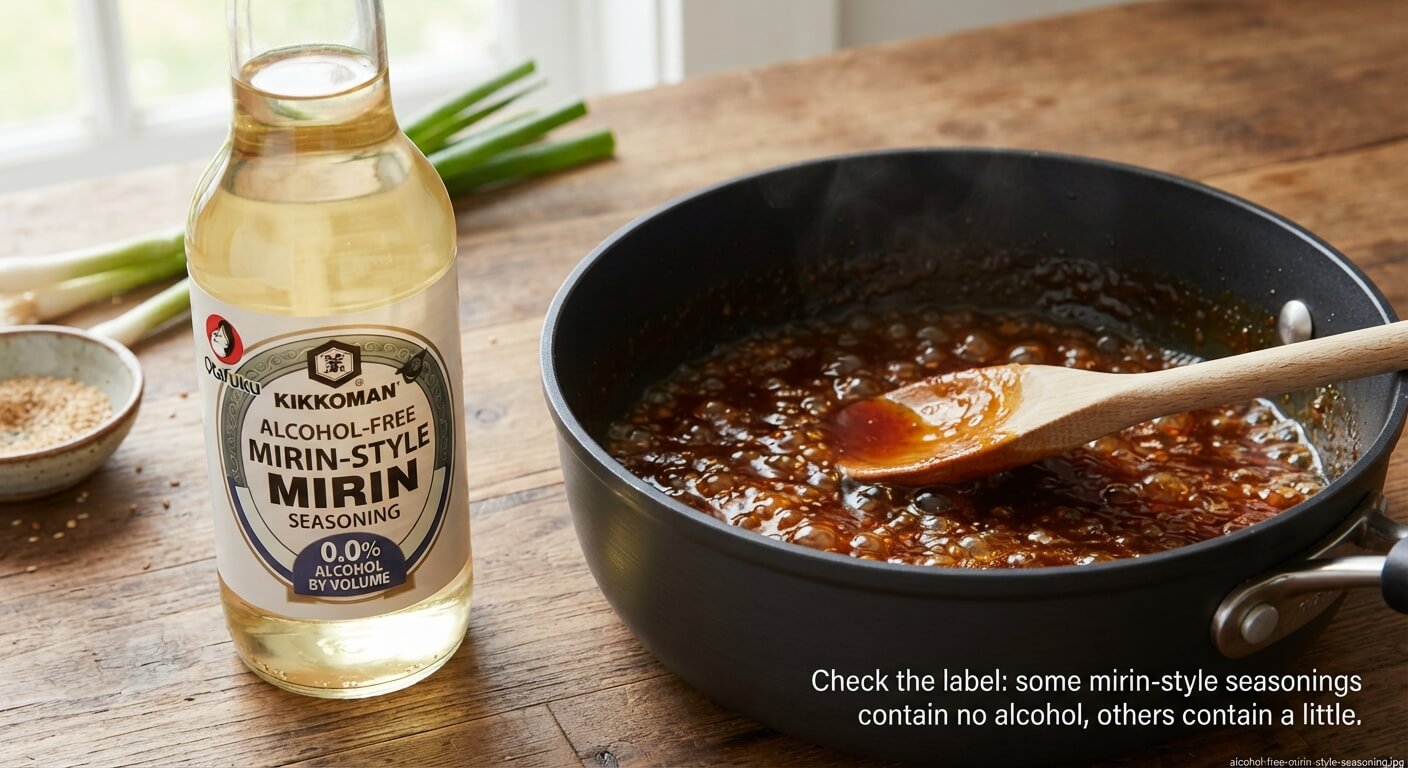
This one replaces mirin more than sake. But in teriyaki and sukiyaki the two work as a pair, so it covers the sweetness and shine. Just One Cookbook names Mizkan Honteri as an option for halal cooks, and Mizkan recommends it for teriyaki sauce, sukiyaki and marinades. If it stands in for sake, cut back on other sweeteners, the same way Just One Cookbook advises when mirin replaces sake.
Check the label first, for the reason covered earlier. Some versions have no alcohol. Others have a little.
Best for: teriyaki, sukiyaki, glazes.
Which sake substitute for halal cooking works best?
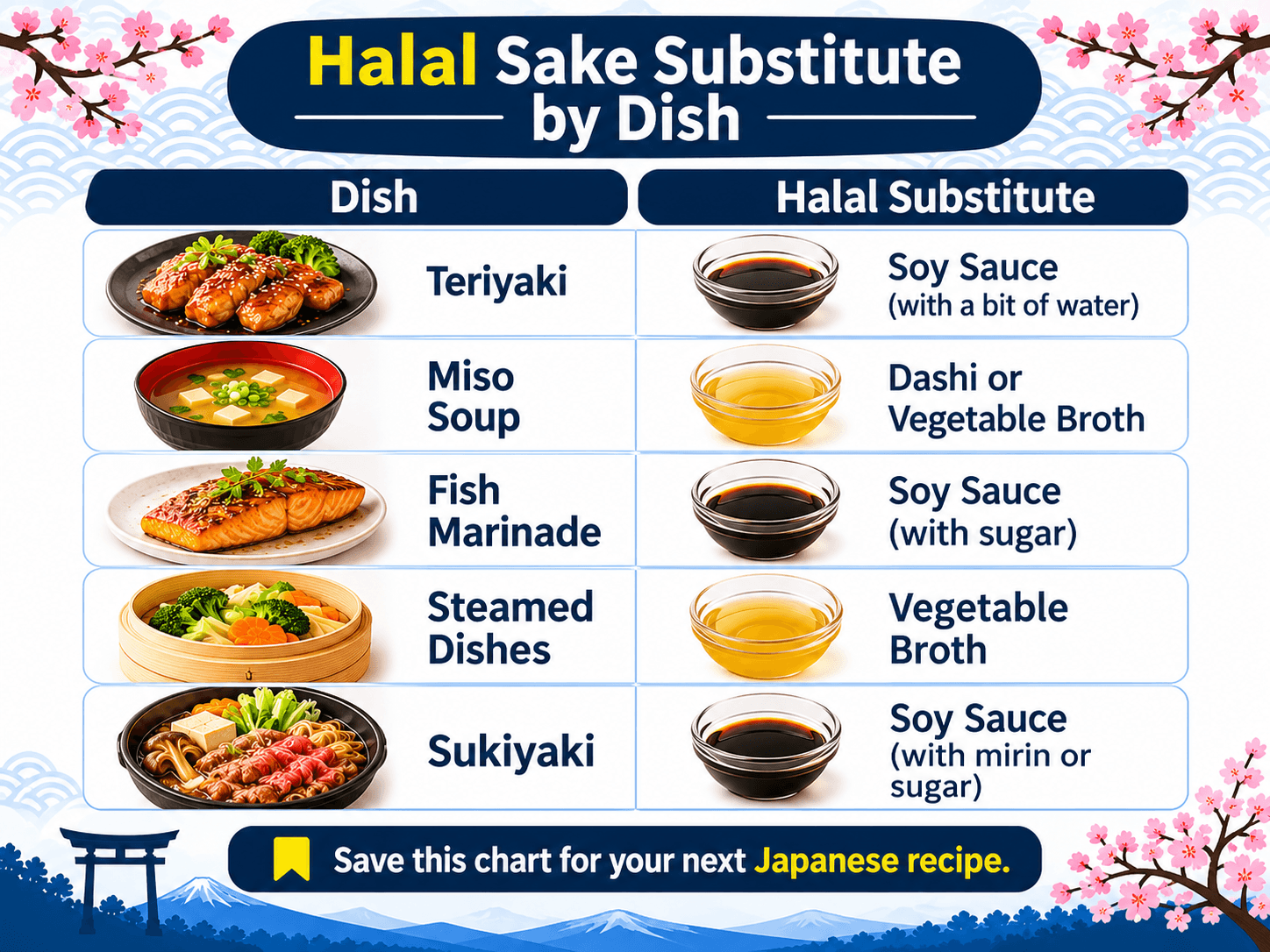
The best choice depends on the dish. Use this quick guide:
| Dish | Good choice | Why |
|---|---|---|
| Teriyaki sauce | Mirin-style seasoning, or white grape juice with lemon | Adds sweetness and shine |
| Miso soup or simmered vegetables | Kombu dashi with a pinch of salt | Adds savory depth |
| Fish or seafood marinade | Lemon juice or ginger | Reduces fishy smell |
| Steamed dishes | Water or dashi | Keeps the flavor light and clean |
| Sukiyaki | Dashi plus mirin-style seasoning | Covers savory and sweet |
How to cook Japanese food without alcohol
A few habits make alcohol-free Japanese cooking easier.
- Think in three parts: acid, sweetness and umami. Most sake substitutes cover only one, so combine them.
- Add early. Just One Cookbook notes that sake goes in early in cooking, while mirin goes in later.
- Taste as you go. Sweet substitutes like grape juice can push a dish too far, so lower the sugar first and add more only if needed.
- Read every label. Check mirin-style seasonings and ready-made sauces for alcohol before you buy.
Expect a lighter result than the original recipe. If the dish tastes flat, a little more dashi or a small splash of soy sauce is a common fix.
Does the alcohol cook off?
People often say alcohol evaporates when you cook. Islamic Services of America shared a table from published studies. After 30 minutes at the boiling point of alcohol, about 35 percent is left. After two and a half hours, about 5 percent is left. Even long cooking does not remove all of it.
The ruling is a separate question from the science. LPPOM MUI says it does not matter how much is used or whether the dish is heated. Halal Times reports that most scholars treat any use of alcohol in cooking as not allowed, while a minority allow it only if the alcohol is fully transformed. Which view you follow is for you and your own scholar. This guide is for people who avoid alcohol in the kitchen completely.
LPPOM MUI adds one more point. In its view, a forbidden seasoning should be left out rather than replaced. If you still want a replacement, look at what the seasoning did, such as lemon for fishy smell. This list follows that idea.
Common questions
Can I leave sake out completely?
Yes. Just One Cookbook says you can, but the dish will have less aroma and umami. Water or dashi keeps the flavor from falling flat.
Is cooking sake halal?
No. Takara Sake describes cooking sake as made the same way as regular sake, with a little salt added. It is still alcoholic.
The easy way to start
A sake substitute for halal cooking doesn’t have to be complicated. Start with dashi or water. They suit most soups, steamed dishes and simmered recipes. Add lemon or a little diluted rice vinegar when you want freshness. Use grape juice or an alcohol-free mirin-style seasoning when the dish needs sweetness. Always check labels, and choose the options that match your own standard on vinegar and trace alcohol.
Sources
- Sake vs. Mirin, Just One Cookbook
- Here’s Why Sake and Mirin are Haram, LPPOM MUI
- Sake Substitute, A Couple Cooks
- Sake substitutes, Sudachi Recipes
- Sake vs. Mirin, Bokksu Market
- Honteri, Mizkan
- The Ruling on Vinegar Manufactured from Alcohol, ECFR via Ask a Scholar
- Is Wine Vinegar Halal?, IslamQA
- Is Cooking with Alcohol Halal?, Islamic Services of America
- Is Cooking with Alcohol Halal?, Halal Times
- What Is Verjuice?, Sous Chef
- Sake, Cooking Sake and Mirin, Takara Sake

One comment