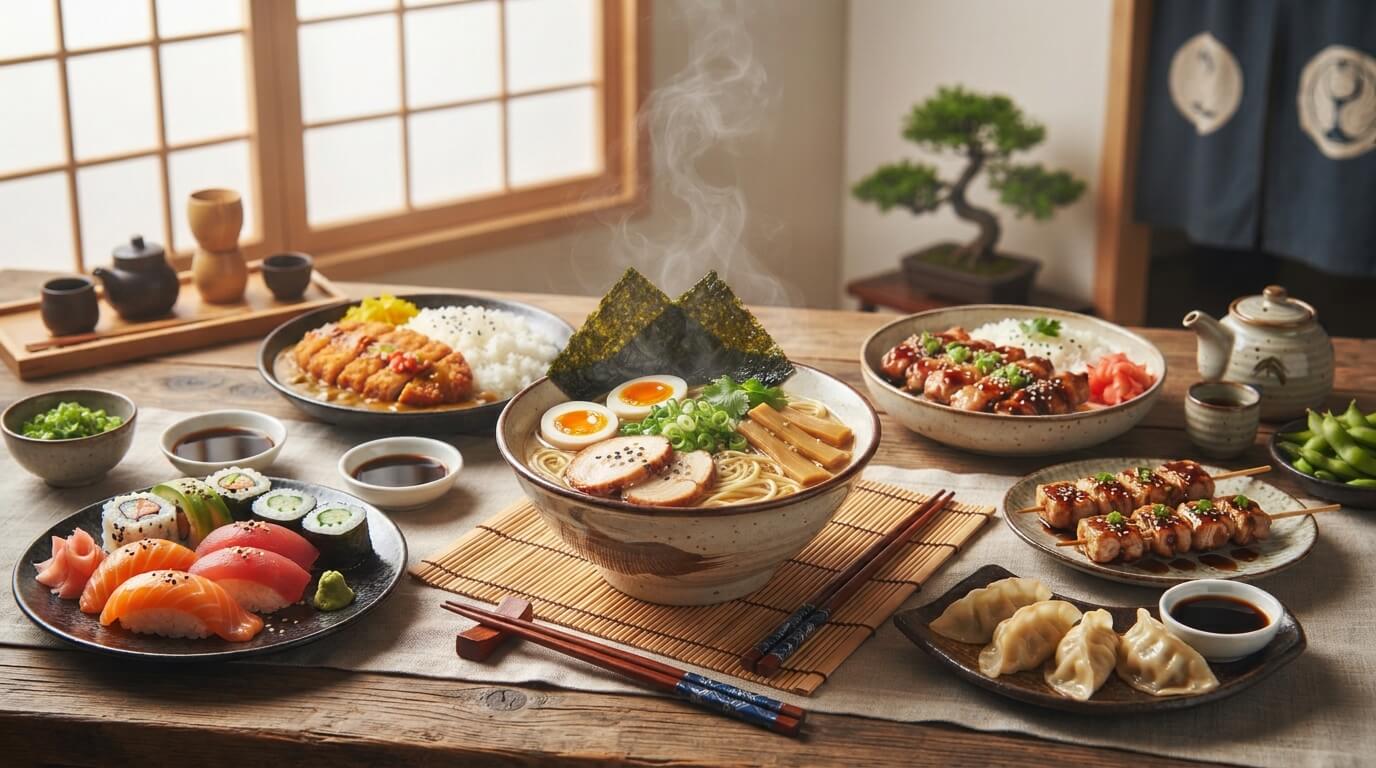
You find a teriyaki recipe that looks perfect. Then you read the ingredients: mirin, sake, maybe a spoonful of pork-based stock. That’s where many Muslim home cooks stop and close the tab.
You don’t have to. Most halal Japanese recipes need only a few small swaps, because the base of everyday Japanese cooking is already simple: rice, fish, vegetables, tofu, noodles, eggs and chicken. The trouble sits in a handful of ingredients: mirin, sake, some soy sauces, pork broth, and store-bought sauces. Once you know them, halal Japanese cooking at home gets easy, and you can enjoy authentic Japanese food without pork or alcohol.
This guide covers what to watch for, what to swap, and 13 easy recipes you can make this week.
Is Japanese food halal?
Not automatically. No Japanese dish is guaranteed halal just because it’s Japanese, and that includes restaurant food in Japan. It depends on the ingredients and how the dish is made.
Some dishes are naturally safe, like plain onigiri, steamed rice, grilled fish, vegetable tempura, and plain soba. Others need changes, like gyoza (usually pork), tonkotsu ramen (pork bone broth), and anything simmered in mirin or sake.
At home you control all of this. That’s the best part.
Japanese ingredients that are not halal (or need checking)
Here is where most problems come from.
Mirin is a sweet rice wine. Traditional mirin (hon-mirin) has about 14% alcohol, so it isn’t halal. Some “mirin-style” seasonings have little or no alcohol, but the amount varies by product, so read the label. Mizkan’s Honteri Mirin is sold as alcohol-free.
Sake is rice wine and shows up in marinades, soups, and simmered dishes. It’s easy to leave out or replace.
Soy sauce is where scholars differ. Natural fermentation creates a small amount of alcohol, roughly 1.5 to 2% in many brands. Some Hanafi rulings, such as Darul Iftaa Chicago’s, consider regular soy sauce permissible because the alcohol is a byproduct and isn’t used to intoxicate. Other scholars, including Shafi’i scholars at SeekersGuidance, advise the more cautious route, especially since alcohol-free soy sauce is easy to find now. Follow the view you’re comfortable with. If you want to skip the question, buy one labelled alcohol-free or halal certified.
Pork and lard hide in more places than you’d expect: ramen broth, gyoza filling, some instant soup bases, and the oil in some restaurant fryers.
Curry roux blocks are a big one. Roux is basically fat, flour and spices pressed into a block, and the fat is often beef fat or lard. Many commercial brands also use meat extracts. Halal-certified roux exists. Or you can make the sauce yourself, as in the curry recipe below.
Dashi is usually kombu (kelp) and bonito flakes, which are fine. Instant dashi powder is a different story, because some brands add meat extracts or other flavorings. Check the label.
Sauces like okonomiyaki, tonkatsu and takoyaki sauce can include alcohol or animal ingredients. Making them yourself takes two minutes.
Halal substitutes for mirin and sake
This is what most people search for, so here are the swaps.
| Ingredient | Halal substitute | Notes |
|---|---|---|
| Mirin (1 tbsp) | 1 tbsp water or chicken stock + 1 tsp sugar | A 3:1 water-to-sugar ratio. Add a few drops of rice vinegar for tang |
| Mirin (ready-made) | Alcohol-free mirin, such as Mizkan Honteri | Closest in flavor. Check the label |
| Mirin (other option) | White grape juice + a few drops of rice vinegar | Works well in glazes |
| Sake (1 tbsp) | 1 tbsp water or light chicken stock + a few drops of rice vinegar | For marinades and simmering |
| Dashi | Kombu and bonito soaked in water, or a checked halal dashi powder | Vegetarian: kombu and dried shiitake |
| Katsu or tonkatsu sauce | Ketchup, soy sauce, sugar, rice vinegar | Recipe in the katsu section |
None of these taste exactly like real mirin. They get close enough that most people at the table won’t notice, especially in teriyaki, noodle broths and stews.
Stock up on a few pantry basics
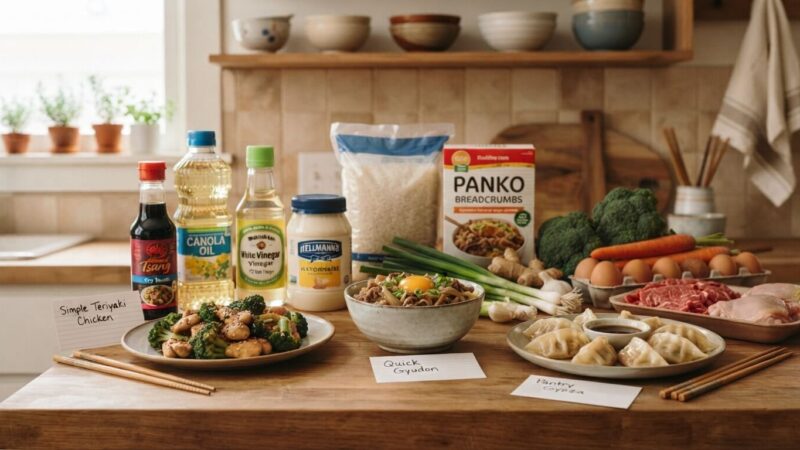
You don’t need a huge shopping list. These cover most recipes here:
- Short-grain Japanese rice
- Alcohol-free or halal-certified soy sauce
- Rice vinegar
- Kombu and bonito flakes (or a checked dashi powder)
- Miso paste (check the label)
- Panko breadcrumbs
- Sesame oil and toasted sesame seeds
- Halal-certified chicken and beef
- Dried noodles: ramen, udon, soba
Many Asian grocery stores now carry halal-labelled sauces, and online shops ship them too. If a product has no label and you aren’t sure, skip it and use the homemade version.
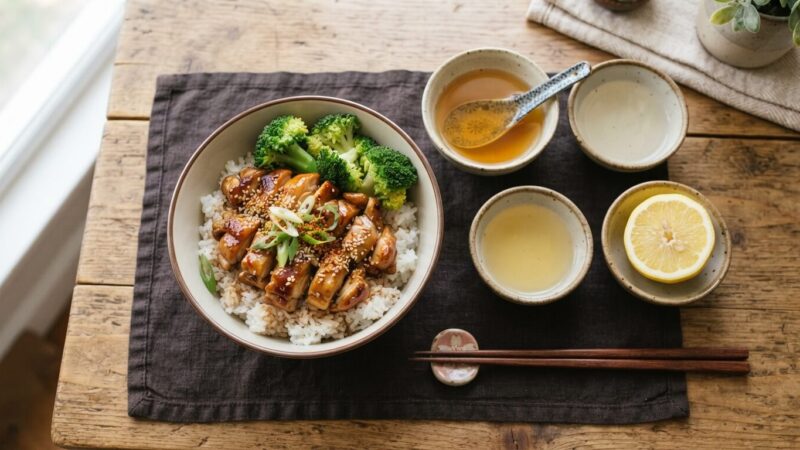
Halal chicken teriyaki
Teriyaki is the easiest place to start. The sauce is soy sauce, sugar, and something sweet and sour. Mirin is traditional, but you won’t miss it here.
Serves 3-4 | Time: 25 minutes
Ingredients
- 500 g boneless chicken thighs
- ¼ cup soy sauce
- ¼ cup water
- 2 tbsp brown sugar
- 1 tbsp rice vinegar
- 1 tsp grated ginger
- 1 garlic clove, grated
- 1 tsp cornstarch mixed with 1 tbsp water
- 1 tbsp oil
Steps
- Mix soy sauce, water, sugar, vinegar, ginger and garlic.
- Heat oil in a pan. Cook the chicken skin side down for 5-6 minutes until golden, then flip for 4 minutes.
- Pour in the sauce. Let it bubble for 3-4 minutes, spooning it over the chicken.
- Stir in the cornstarch mix to thicken. Slice and serve over rice with sesame seeds.
Thighs stay juicier than breasts here. If you only have breasts, pound them to an even thickness so they cook through without drying out.
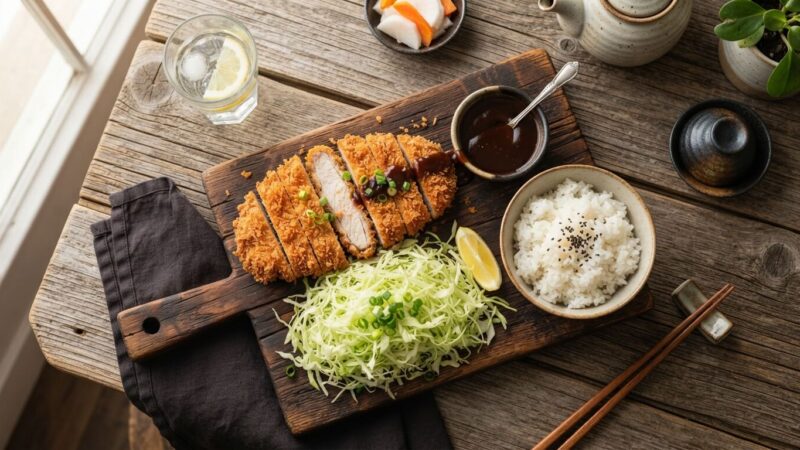
Halal chicken katsu
Katsu is normally pork (tonkatsu). Chicken or beef works just as well, and plenty of people prefer the chicken version.
Serves 2-3 | Time: 30 minutes
Ingredients
- 2 chicken breasts, sliced in half horizontally
- Salt and pepper
- ½ cup flour
- 1 egg, beaten
- 1 cup panko
- Oil for shallow frying
Katsu sauce
- 4 tbsp ketchup
- 2 tbsp soy sauce
- 1 tbsp sugar
- 1 tsp rice vinegar
- A pinch of garlic powder
Steps
- Season the chicken. Coat in flour, then egg, then panko, pressing the crumbs on.
- Heat about 1 cm of oil. Fry for 3-4 minutes per side until deep golden.
- Rest on a rack, not paper towels, so the bottom stays crisp.
- Stir the sauce ingredients together. Slice the katsu and serve with rice, shredded cabbage and the sauce.
For a beef version, use thin sirloin steaks, pound them lightly, and follow the same method. Cook an extra minute per side.
Halal Japanese curry
Japanese curry is thicker and sweeter than Indian curry. It’s mild, which makes it a good one for kids. If you can find a halal-certified roux, use it and follow the packet. If not, make the sauce yourself. It takes about the same time.
Serves 4 | Time: 45 minutes
Ingredients
- 500 g chicken thighs or beef chunks
- 1 large onion, sliced
- 2 carrots and 2 potatoes, cut into chunks
- 2 tbsp butter
- 2 tbsp flour
- 1½ tbsp curry powder
- 1 tsp garam masala
- 3 cups chicken or beef stock
- 1 tbsp ketchup
- 1 tbsp soy sauce
- 1 tsp honey or 2 tbsp grated apple
- Salt to taste
Steps
- Brown the meat in a pot, then set it aside. Cook the onion in the same pot until soft and golden, about 8 minutes.
- Add butter, flour, curry powder and garam masala. Stir for 2 minutes until it smells toasty.
- Slowly add the stock, stirring so no lumps form. Add the meat, carrots, potatoes, ketchup, soy sauce and honey.
- Simmer for 25-30 minutes until the vegetables are soft and the sauce is thick.
Serve over rice. It tastes better the next day.
Halal chicken ramen
Ramen in Japan is often pork-based. You can build a deep, satisfying chicken broth at home without any pork at all.
Serves 2 | Time: about 1 hour, mostly hands-off
For the broth
- 500 g chicken wings or bones
- 1 litre water
- 1 piece kombu (about 10 cm)
- 3 slices ginger
- 2 garlic cloves
- 2 spring onions
For each bowl
- 1 tbsp soy sauce
- 1 tsp sesame oil
- Ramen noodles
- A soft-boiled egg
- Sliced spring onion, corn, or spinach
Steps
- Simmer the chicken, ginger, garlic and spring onions gently for 45 minutes. Add the kombu for the last 10 minutes only, because it turns bitter if boiled long.
- Strain the broth.
- Put the soy sauce and sesame oil in the bottom of each bowl. Pour the hot broth over.
- Cook noodles separately according to the packet, drain, and add to the bowls. Top with egg and vegetables.
For halal beef ramen, use beef shank or short rib bones and simmer for 2 hours or more. Skim the surface as it cooks.
Halal chicken yakitori
Yakitori is grilled skewered chicken. The usual sauce (tare) uses mirin and sake, but this one skips both.
Mix ¼ cup soy sauce, 3 tbsp sugar, ¼ cup water and 1 tsp rice vinegar. Simmer in a small pan for 8-10 minutes until it coats a spoon. Thread bite-sized thigh pieces onto soaked bamboo skewers with pieces of spring onion in between. Grill or broil for 10 minutes, brushing with tare every few minutes and turning once.
Halal Japanese fried rice
Use day-old rice. Fresh rice is too wet and goes mushy.
Heat 1 tbsp oil and scramble 2 eggs, then push them aside. Add diced cooked chicken or shrimp and a handful of peas and carrots. Add 3 cups cold cooked rice, breaking up the lumps. Season with 1½ tbsp soy sauce, 1 tsp sesame oil, salt and white pepper. Finish with spring onion. The whole thing takes about 12 minutes.
Halal gyoza
Gyoza filling is typically pork. Swap in ground chicken or beef.
Mix 250 g ground chicken, 1 cup finely chopped cabbage (salted and squeezed dry), 1 spring onion, 1 grated garlic clove, 1 tsp grated ginger, 1 tbsp soy sauce and 1 tsp sesame oil. Fill store-bought gyoza wrappers (check the ingredients, as most are just flour and water). Pan-fry the bottoms for 2 minutes until golden, add ¼ cup water, cover, and steam for 4-5 minutes. Dip in soy sauce mixed with a little rice vinegar.
Halal tempura
Tempura is mostly about keeping the batter cold and not over-mixing it.
Whisk 1 cup flour with 1 cup ice-cold sparkling water and a pinch of salt. Lumps are fine. Dip sweet potato slices, broccoli, zucchini, mushrooms or large shrimp, and fry in oil at about 180°C for 2-3 minutes. Drain on a rack.
Restaurant tempura is sometimes fried in oil shared with other foods, which matters if you eat out. At home it’s not an issue.
For dipping, mix ½ cup dashi, 1 tbsp soy sauce and 1 tsp sugar, and add grated daikon on top.
Halal okonomiyaki
This savory cabbage pancake usually has pork belly on top. Leave it out, or use thin strips of halal beef or chicken, or shrimp.
Mix 1 cup flour, ¾ cup dashi, 1 egg and 3 cups shredded cabbage. Cook in a pan like a thick pancake, 4-5 minutes per side. Brush with a sauce made from 3 tbsp ketchup, 1 tbsp soy sauce and 1 tsp sugar. Add mayonnaise and bonito flakes on top. Store-bought okonomiyaki sauce can contain alcohol, so the homemade one is safer.
Halal miso soup
Miso soup is one of the simplest halal Japanese meals. Just check the miso paste label and your dashi.
Heat 2 cups dashi. Add cubed tofu and a spoonful of wakame seaweed. Turn off the heat. Dissolve 1½ tbsp miso paste in a ladle of hot broth, then stir it back into the pot. Never boil miso, because it dulls the flavor.
Halal takoyaki
Takoyaki needs a special pan with round molds, and that’s the only real hurdle. The batter is flour, dashi, egg and baking powder. Each ball gets a piece of boiled octopus, pickled ginger and tempura scraps. Brush with the homemade sauce from the okonomiyaki recipe and top with mayonnaise and bonito flakes.
If you don’t want octopus, use small shrimp or cooked chicken pieces.
Halal udon
Cook thick udon noodles per the packet. For the broth, heat 2 cups dashi with 1½ tbsp soy sauce and 1 tsp sugar. Pour over the noodles and top with spring onion, a soft egg or fried tofu pockets. It’s comforting and takes 10 minutes.
Halal sushi at home
Sushi is easier than people think. The fillings can be completely pork-free and alcohol-free.
Cook 2 cups sushi rice. While it’s warm, fold in a mix of 3 tbsp rice vinegar, 1 tbsp sugar and 1 tsp salt. Spread on nori, add fillings like cooked shrimp, cucumber, avocado, omelet strips or crab sticks (check these, since some contain additives), and roll with a bamboo mat.
Raw fish is a personal choice. Most people at home stick to cooked or vegetable fillings, which are safer anyway unless you have access to sushi-grade fish.
Tips for good flavor without the alcohol
Mirin and sake add sweetness and depth. When you replace them, you have to make up for that.
A little sugar plus rice vinegar covers the sweet and tangy part. Dashi adds savory depth, so use it in place of plain water whenever you can. A teaspoon of miso in a marinade adds a lot of body. And let things simmer. Teriyaki, curry and stews taste better when the flavors have a few extra minutes to come together.
Salt carefully. Soy sauce is already salty, so taste before you add more.
Common questions
What can Muslims eat at Japanese restaurants? Plain grilled fish, steamed rice, vegetable tempura, edamame and plain noodle dishes are usually the safest. Always ask about the broth, the sauce and the frying oil. Halal-certified restaurants are the clearest option, and they’re more common in big cities than they used to be.
Can Muslims eat Japanese curry? Yes, if the roux has no pork fat, lard or alcohol. Look for halal-certified roux or make the sauce from scratch as above.
Can you make ramen halal? Yes. Use chicken or beef broth instead of pork bone, and a soy sauce you trust. Check the noodles too, as most are just wheat but some include additives.
What Japanese dishes are naturally halal? Onigiri, plain steamed rice, miso soup (with a checked paste and dashi), grilled fish, vegetable tempura and cold soba are good starting points.
Is mirin halal? Traditional mirin (hon-mirin) contains about 14% alcohol, so it is not halal. Alcohol-free mirin products and homemade substitutes such as water, sugar and a little rice vinegar work well in cooking.
Where to start
If you’re new to this, make chicken teriyaki first. It uses a few pantry items, cooks in 25 minutes, and teaches you the basic soy-sugar-vinegar balance that shows up in half the recipes here. After that, try the curry and the katsu.
Keep a small bottle of rice vinegar, a bag of sugar and a soy sauce you trust, and you can cook most Japanese home food without feeling like you’re missing anything. Check labels on anything pre-made. When in doubt, make the sauce yourself.
Halal rules and certification differ by country and by school of thought. If you’re unsure about something like soy sauce or miso, check with your local halal authority or a scholar you trust.
Sources
- Just One Cookbook, Sake vs. Mirin: https://www.justonecookbook.com/sake-mirin/
- Just One Cookbook, Mirin substitutes: https://www.justonecookbook.com/?p=14680
- Muslim.sg, Is mirin halal?: https://muslim.sg/articles/is-mirin-halal
- Darul Iftaa Chicago, Ruling on alcohol in soy sauce (Hanafi): https://islamqa.org/hanafi/darul-iftaa-chicago/271139/is-soy-sauce-halal-the-ruling-on-alcohol-in-soy-sauce/
- SeekersGuidance, Soya sauce in the Shafi’i school: https://seekersguidance.org/answers/halal-and-haram/is-soya-sauce-permissible-to-consume-in-shafii-school/
- Halal Times, Is soy sauce halal?: https://www.halaltimes.com/is-soy-sauce-halal
- Sudachi Recipes, Japanese curry roux: https://sudachirecipes.com/japanese-curry-roux/
- Al Modina, Halal Japanese curry: https://almodinastore.com/blogs/halal-101-japan-edition/classic-japanese-curry-kare-raisu-halal-recipe-ep-03
- BYFOOD, Guide to halal food in Japan: https://byfood.com/blog/guide-halal-food-in-japan-p-495