
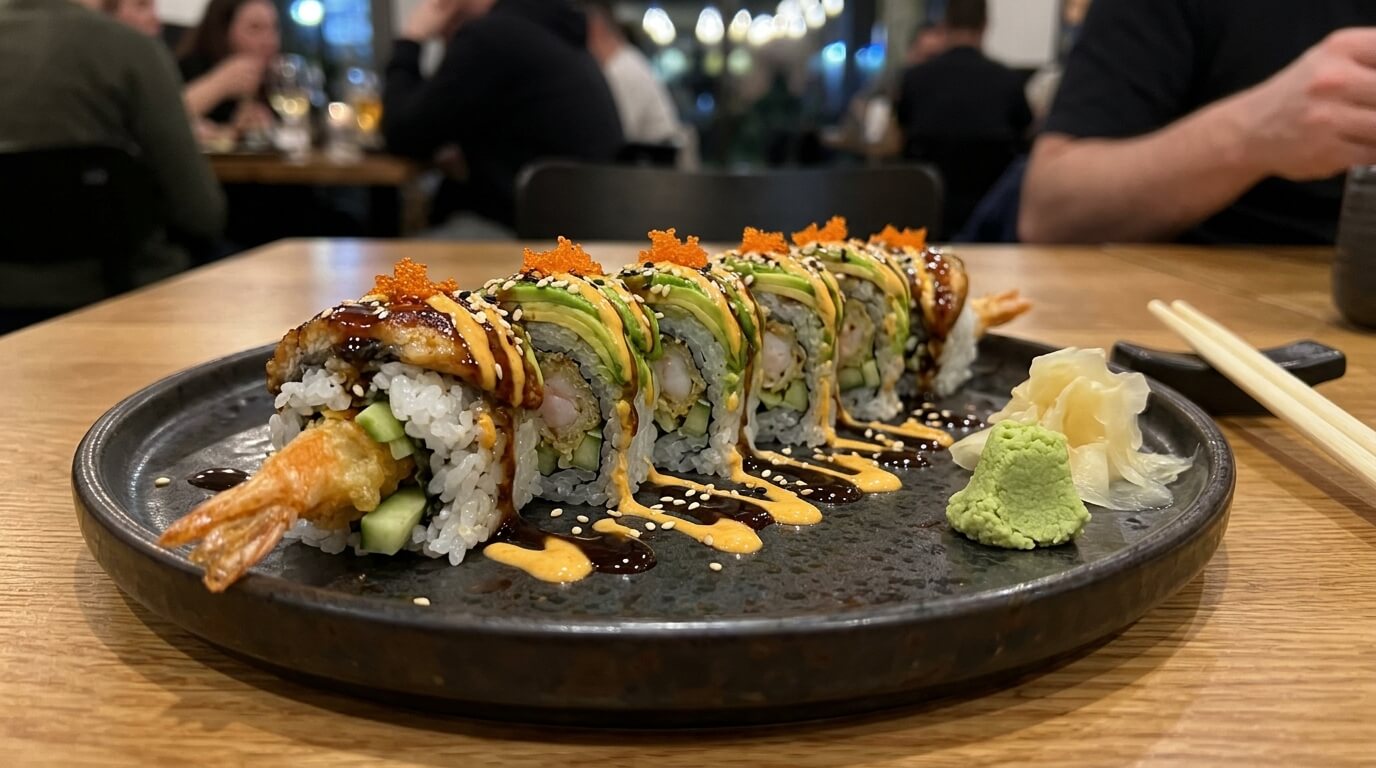
A dragon roll is an inside-out sushi roll with shrimp tempura and cucumber in the middle and thin avocado slices on top. This dragon roll recipe walks you through every step, from cooking the rice to slicing the finished roll. It uses no raw fish, so it works for people who are nervous about sashimi. The avocado “scales” look fancy, but they are just overlapping slices. Once you know how to make a dragon roll, you can repeat it for a dinner at home or a small sushi night with friends.
Dragon Roll Recipe at a Glance
Makes: 1 roll (8 pieces)
Time: Roughly 45 minutes to an hour once your sushi rice is ready. This is an estimate, and it depends on how fast you work.
Skill level: Beginner to intermediate. The topping step takes a little patience.
For one roll, you need:
- ½ cup seasoned sushi rice
- ½ sheet of nori
- 2 pieces of frozen shrimp tempura
- A ½-inch strip of cucumber, long enough to cross the nori
- ½ ripe avocado
- 4 thin slices of broiled unagi (optional, but common in restaurant versions)
- Unagi sauce and spicy mayo, for drizzling
- Toasted sesame seeds or tobiko, to finish
Cooking Japanese food without alcohol? Many recipes call for sake, but you can swap it out. See our guide on sake substitute for halal cooking for alcohol-free options.
What Is a Dragon Roll?
A dragon roll is an inside-out roll, also called uramaki. The rice sits on the outside and the nori wraps the fillings in the center. Most versions put shrimp tempura and cucumber inside. Sliced avocado goes on top, laid in overlapping rows so it looks like dragon scales.
This is an American-style sushi roll. You will not find it in traditional sushi shops in Japan. It was built for people who like cooked fillings, creamy textures, and sweet-savory sauces.
There is no single official recipe. Restaurants change the filling, the toppings, and the sauces. Some top the roll with eel, some with tobiko, some with both. Many people also mix up dragon rolls and caterpillar rolls, since both wear avocado on top. A simple way to tell them apart is the filling. A dragon roll usually has shrimp tempura inside. A caterpillar roll usually has eel inside. Not every menu follows this rule, so treat it as a guide, not a law.
Dragon Roll Ingredients and Why Each One Matters
The quality of a dragon roll sushi comes down to a few basic ingredients. Here is what to look for.
Sushi rice. Use Japanese short-grain rice. Cook it, then season it with sushi vinegar, a mix of rice vinegar, sugar, and salt. A common ratio for 2 cups of uncooked rice is about ⅓ cup rice vinegar, 2 tablespoons sugar, and 1 teaspoon salt. Adjust to taste. Plain long-grain rice will not stick together well enough for rolling.
Nori. This is the dried seaweed sheet. You only need half a sheet per roll. Keep unused sheets sealed so they stay crisp.
Shrimp tempura. Frozen, pre-fried shrimp tempura is the easiest route. Many grocery stores carry it, and it crisps up well in an air fryer or oven. If you want to fry your own, you can, but the roll works fine with the store-bought kind.
Cucumber. Japanese and Persian cucumbers are slim and have small seeds. If you only have an English cucumber, cut it in half lengthwise and scoop out the seeds with a spoon. Seeds add water, and extra water makes a soggy roll.
Avocado. Pick one that is ripe but still firm. If it is too soft, the slices will tear. If it is too hard, they will not bend around the roll. A ripe avocado gives a little under gentle pressure from your palm.
Unagi (freshwater eel). You can buy cooked, packaged unagi, usually frozen, at Asian or Japanese grocery stores. It is already cooked, and you just warm it under the broiler. It is optional, but it gives the roll that sweet, smoky finish.
Sauces. Unagi sauce is sweet and thick. Spicy mayo is creamy with a little heat, and it tastes best when made with Japanese mayonnaise. You can buy both or make them at home.
Garnish. Toasted sesame seeds add crunch. Tobiko, the small orange fish roe, adds a salty pop and a bright color.
Equipment You Need
- Bamboo sushi mat (makisu): Cover it fully with plastic wrap. This keeps rice from getting stuck in the slats.
- Plastic wrap: You will use it twice, once on the mat and once to shape and cut the finished roll.
- Sharp knife and cutting board: A dull knife crushes the roll.
- Small bowl of water: To dampen your hands and the knife.
- Clean damp towel: To wipe the blade between cuts.
- Baking sheet and foil: For broiling the unagi.
No bamboo mat? A clean kitchen towel inside plastic wrap can work in a pinch, though the roll will be harder to keep tight.
How to Make a Dragon Roll, Step by Step
Get everything prepped before you start rolling. Rice should be cooked, seasoned, and cooled to a warm or room temperature. A hot pile of rice will wilt the nori.
Step 1: Cut the cucumber
Cut a cucumber strip about ½ inch thick, long enough to cover the width of the nori. If it falls short, use two pieces end to end.
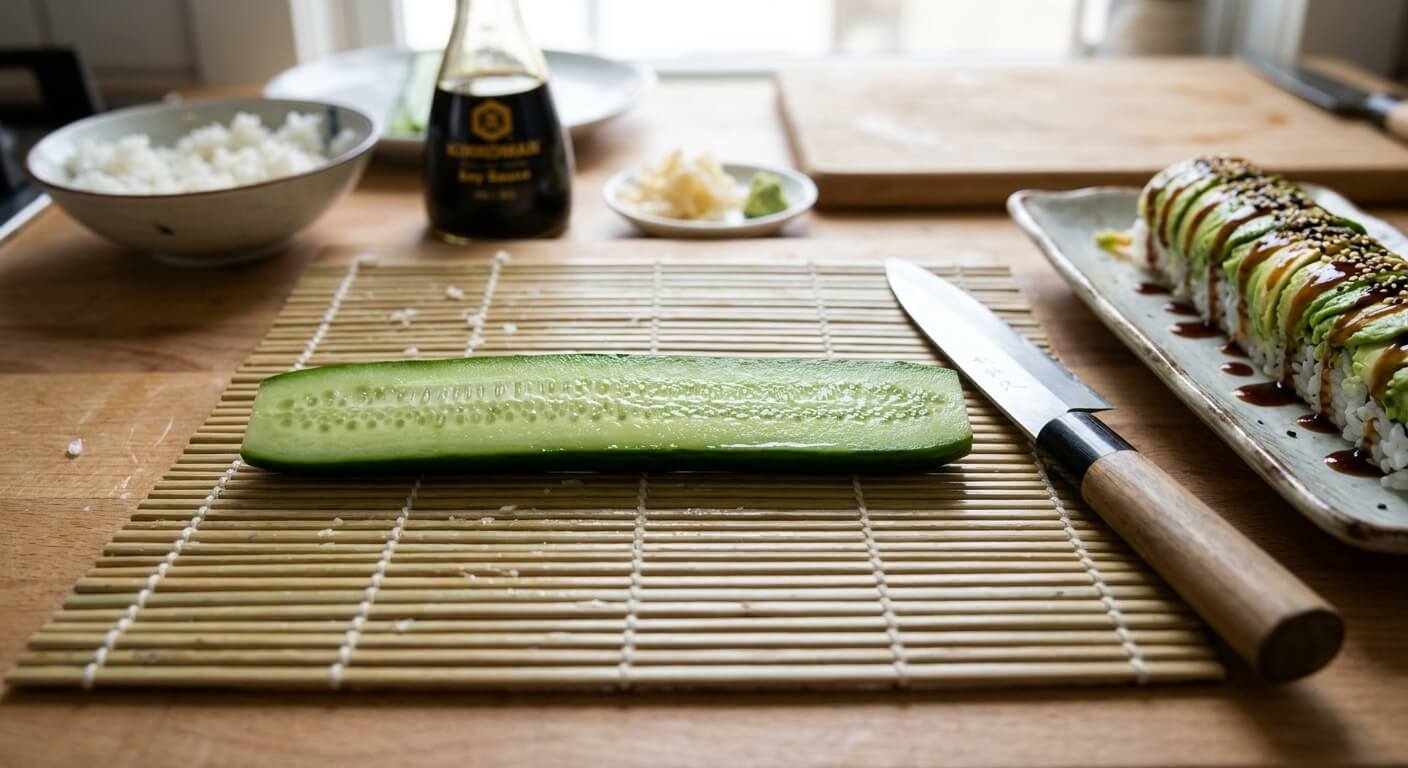
Photo to use: a cucumber strip next to the cutting board, with seeds removed if using English cucumber.
Step 2: Slice and broil the unagi
Wipe off extra sauce from the unagi. Cut the fillet in half lengthwise. Take one half and slice it on a diagonal into four thin pieces, about 1.5 inches wide and 2 inches long. Thin pieces bend more easily over the round roll.
Line a baking sheet with non-stick foil, or rub regular foil with a little oil. Place the pieces skin side up. Broil on high for about 5 to 6 minutes, with the pan around 6 inches from the heat. Ovens vary, so watch it closely. Let it cool until you can handle it. You want it warm, not hot.
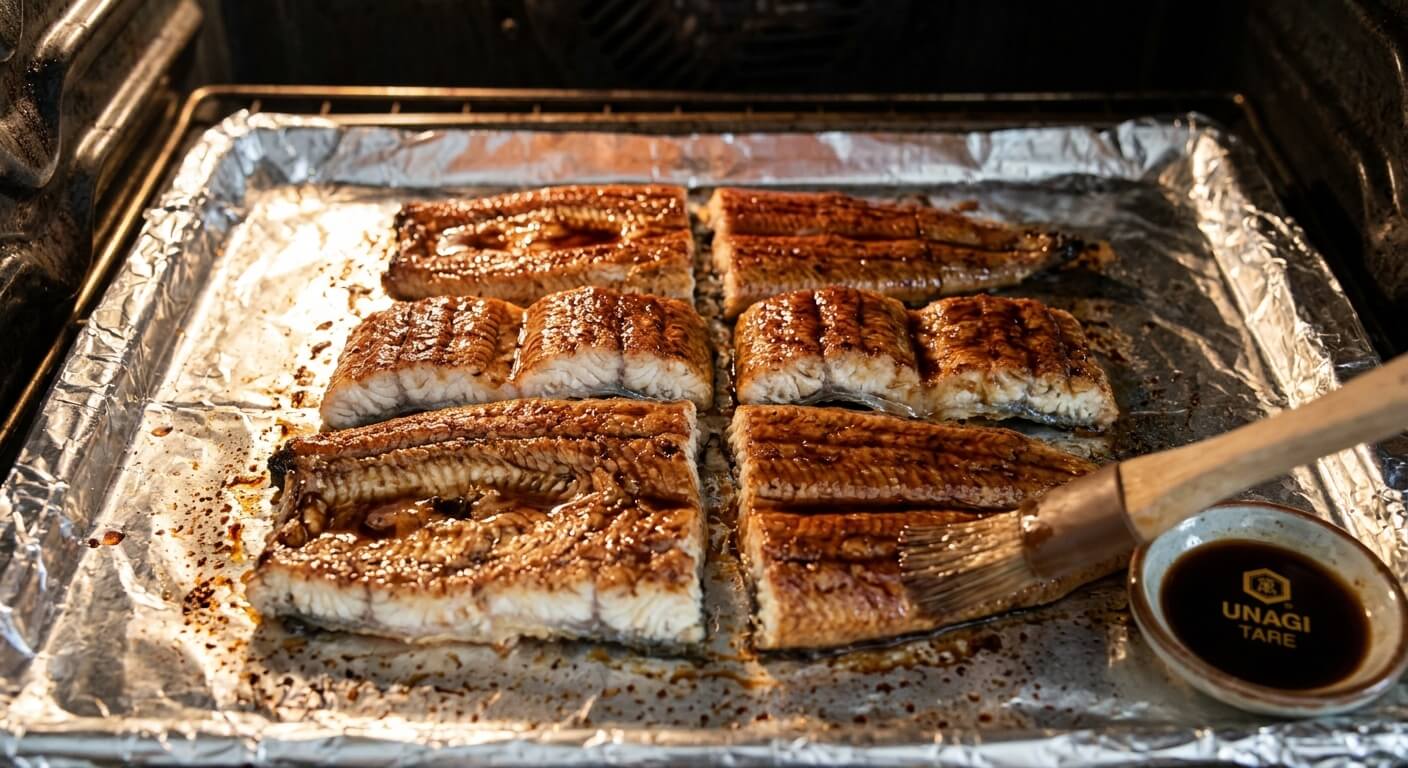
Photo to use: four unagi slices skin side up on the foil-lined pan.
Step 3: Cook the shrimp tempura
Cook two pieces of frozen shrimp tempura by the package directions. An air fryer is quick and easy. Deep frying gives extra crunch. Let them cool a minute so you can pick them up, but keep them warm and crisp.
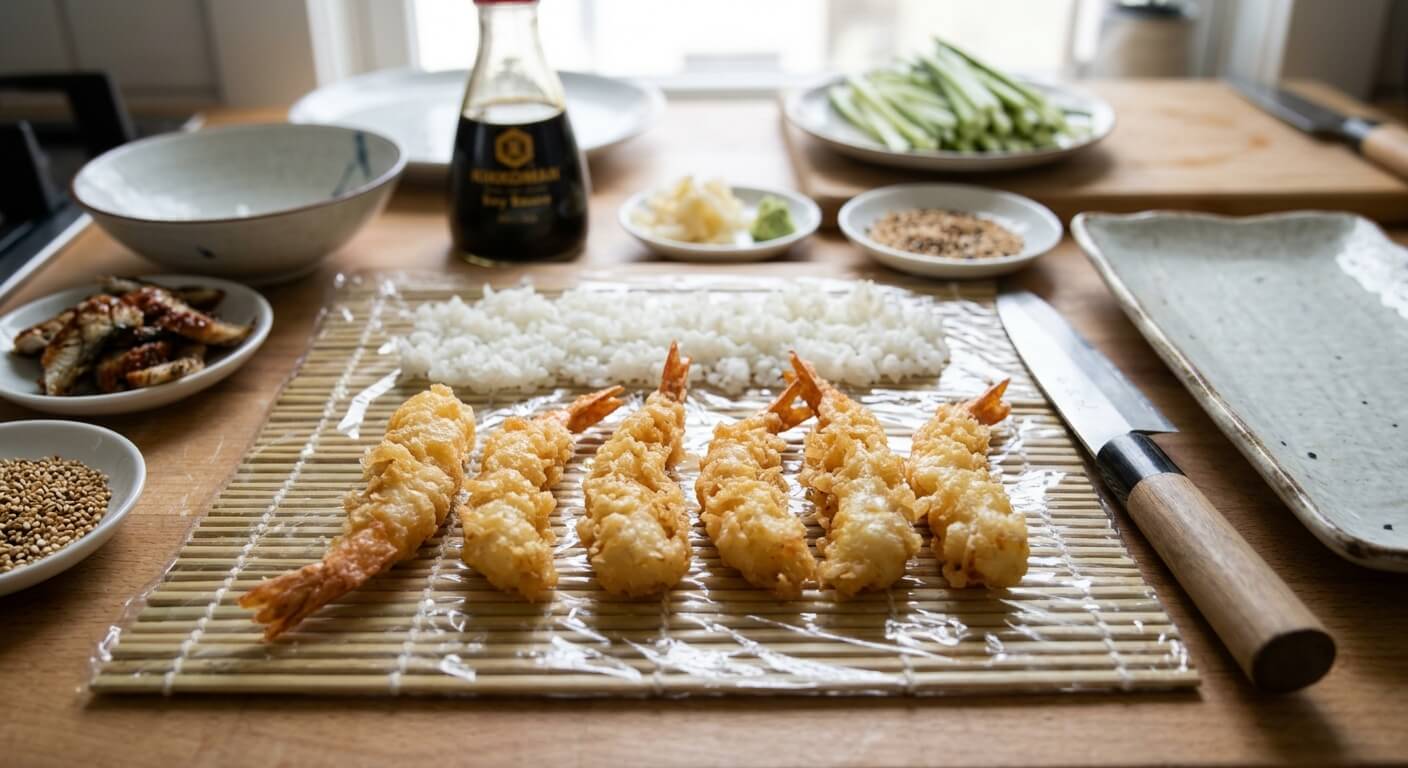
Step 4: Spread the rice on the nori
Place half a sheet of nori, rough side up, on your plastic-wrapped mat. Wet your fingers with cold water. Spread about ½ cup of sushi rice over the whole sheet, all the way to the edges.
Do not press hard. You should be able to see single grains of rice, not a flat paste.
Now flip the nori so the rice side faces down on the mat. Leave about 1 inch of mat bare at the bottom so you have space to grab it.
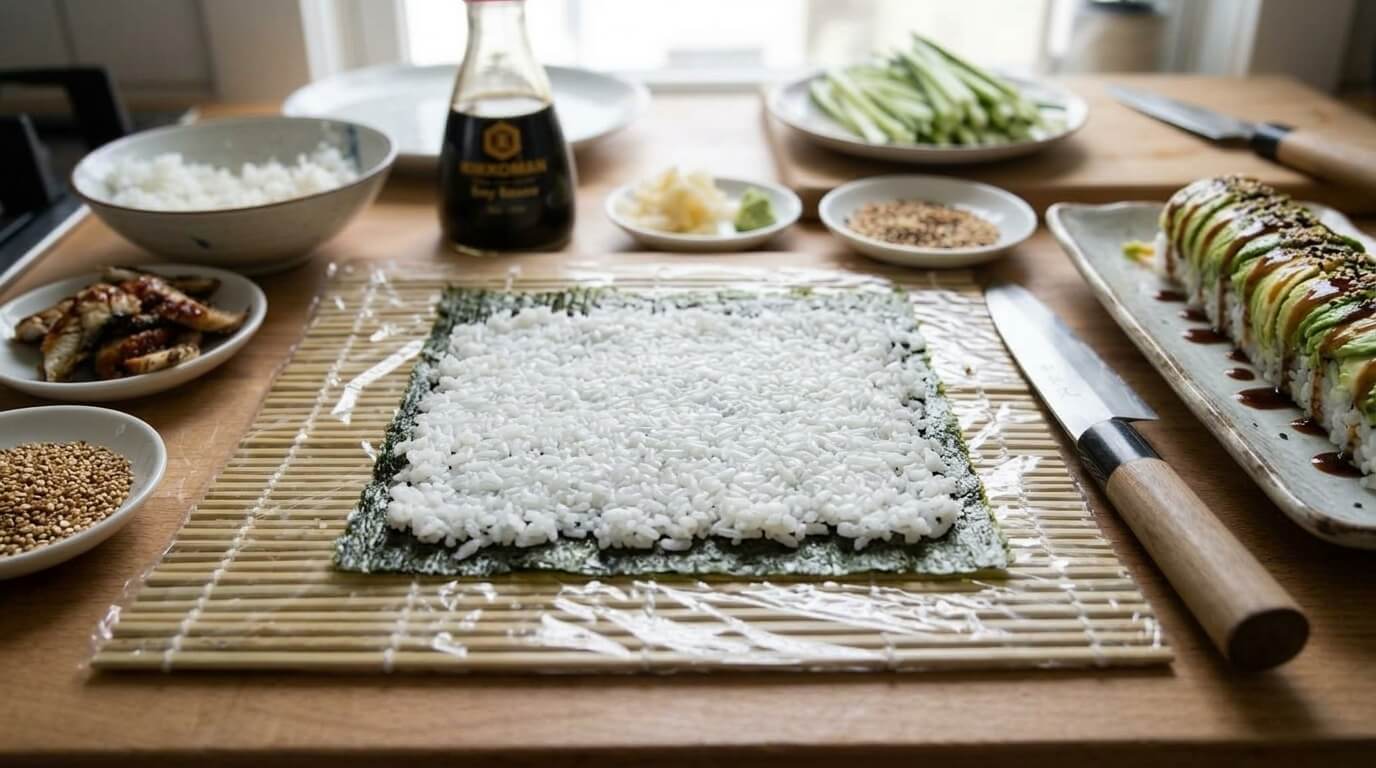
Step 5: Add the fillings and roll
Lay the cucumber across the center. Place the two shrimp tempura on top, end to end, with the tails pointing out opposite sides. You can also cut the tails off.
Hold the fillings with your fingertips. Lift the edge of the mat up and over the fillings, then keep rolling forward until the nori closes. Hold the roll with one hand and pull the top of the mat away from you with the other. This tightens the roll without squeezing it flat. Gently press both ends to tidy up any stray rice.
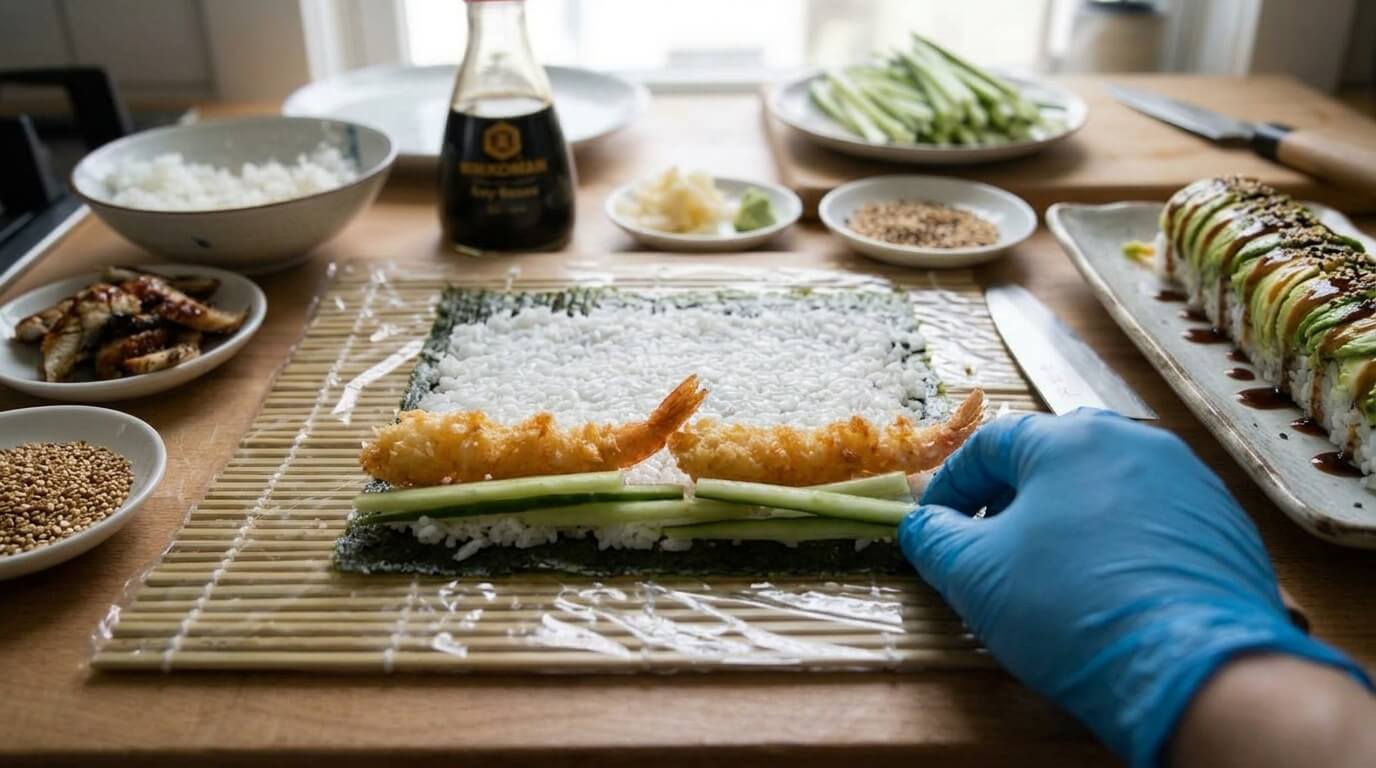
Photo to use: fillings laid out on the rice, then the rolled log on the mat.
Step 6: Slice the avocado
Cut the avocado in half and remove the pit. Peel one half and lay it flat side down. This gives you a stable surface for cutting. Slice 6 to 9 thin pieces, around ⅛ inch thick. Try to keep them even in size.
Wrap the unused half tightly with the pit still in, and refrigerate it.
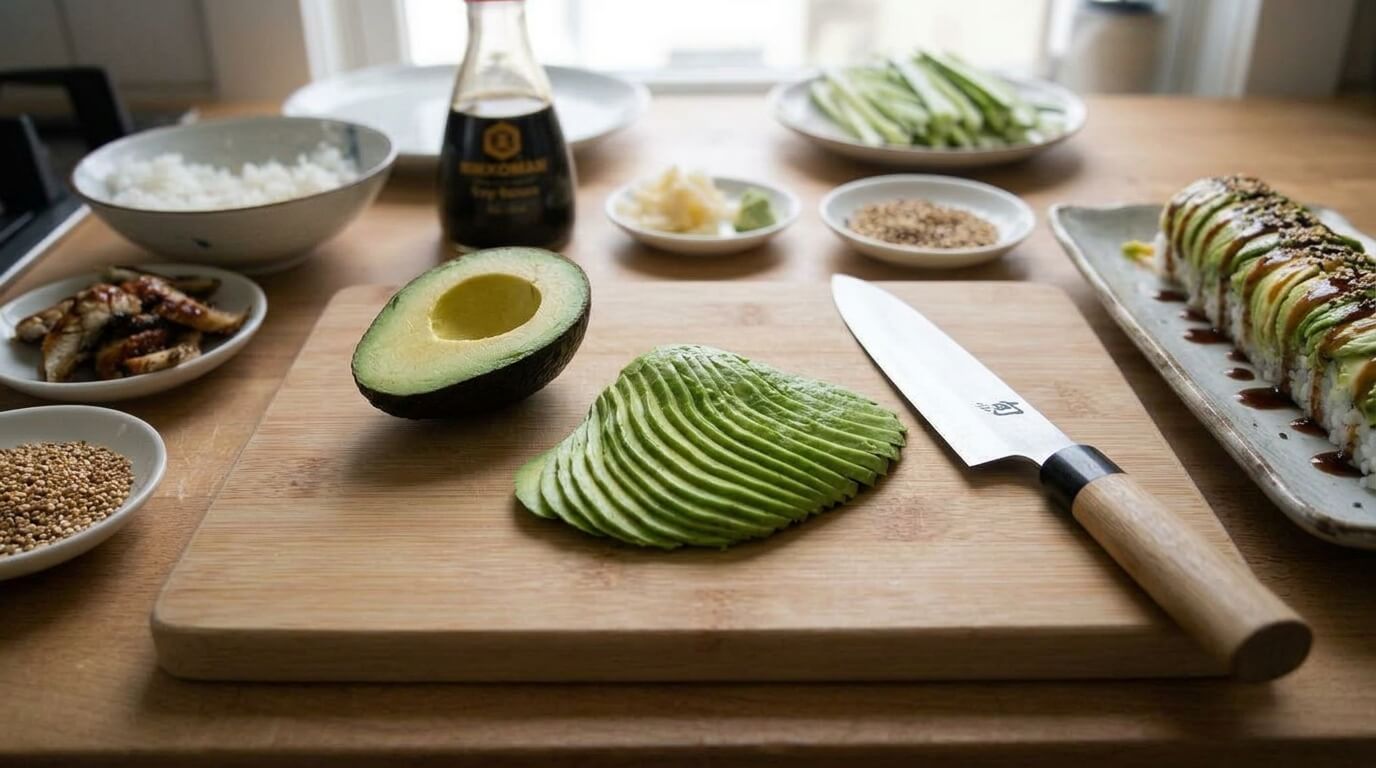
Step 7: Layer the unagi and avocado on top
Set the four unagi pieces across the roll, skin side down. Put one at each end so they cover the tips of the roll. Space the other two evenly in between.
Fill each gap with two or three overlapping avocado slices. When you are done, the pattern from one end to the other is unagi, avocado, unagi, avocado, unagi, avocado, unagi. Do not worry about matching the cuts to the toppings. Even spacing is enough.
If you skip the unagi, cover the whole roll with overlapping avocado slices instead.
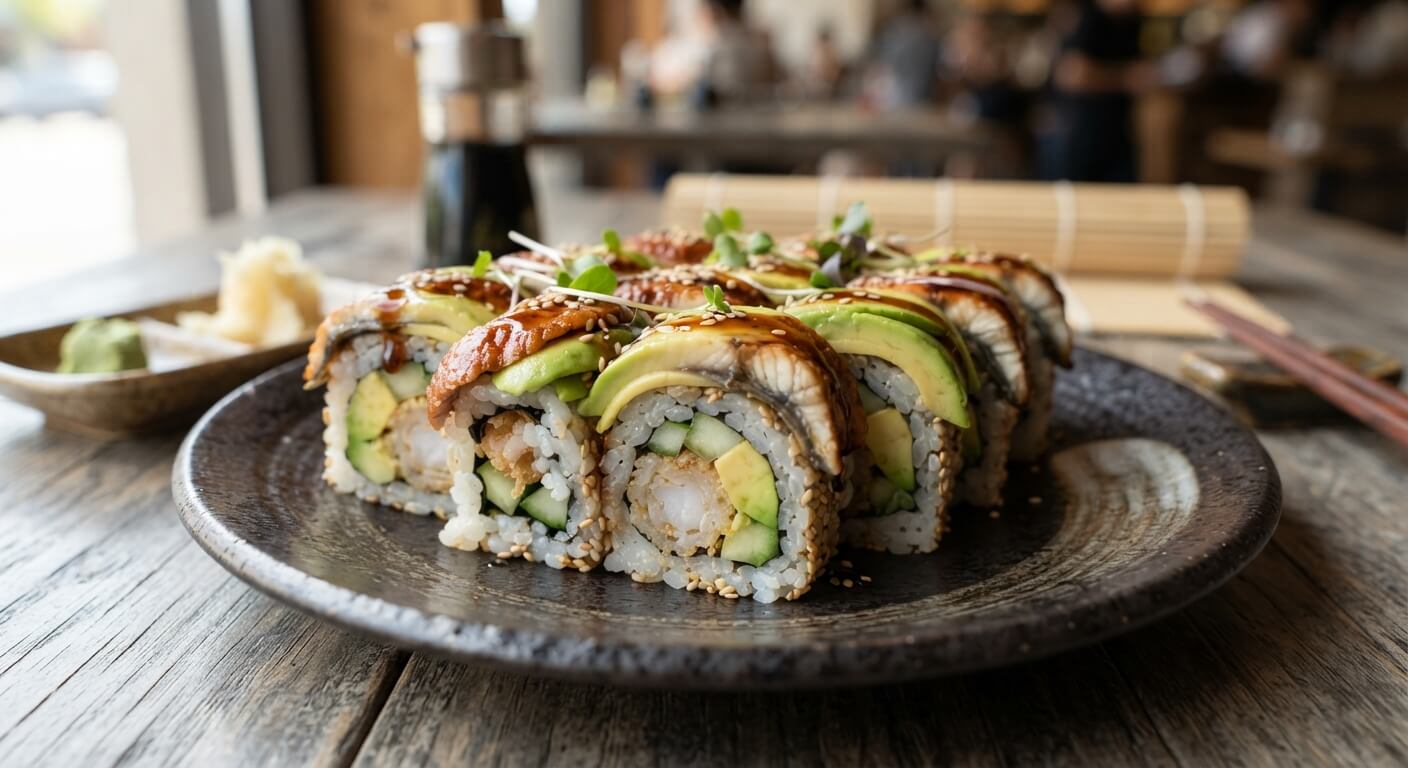
Photo to use: the roll from above with the alternating unagi and avocado pattern.
Step 8: Wrap and shape the roll
Cover the whole roll with plastic wrap. Leave a few extra inches hanging past the top edge. Do not cut this extra piece. You will need it in the next step.
Place the mat over the plastic and press around the roll with firm, gentle pressure. This helps the toppings stick to the rice and curve around the roll. Take off the mat. If the plastic lifts, smooth it back down so it sits snug against the toppings.
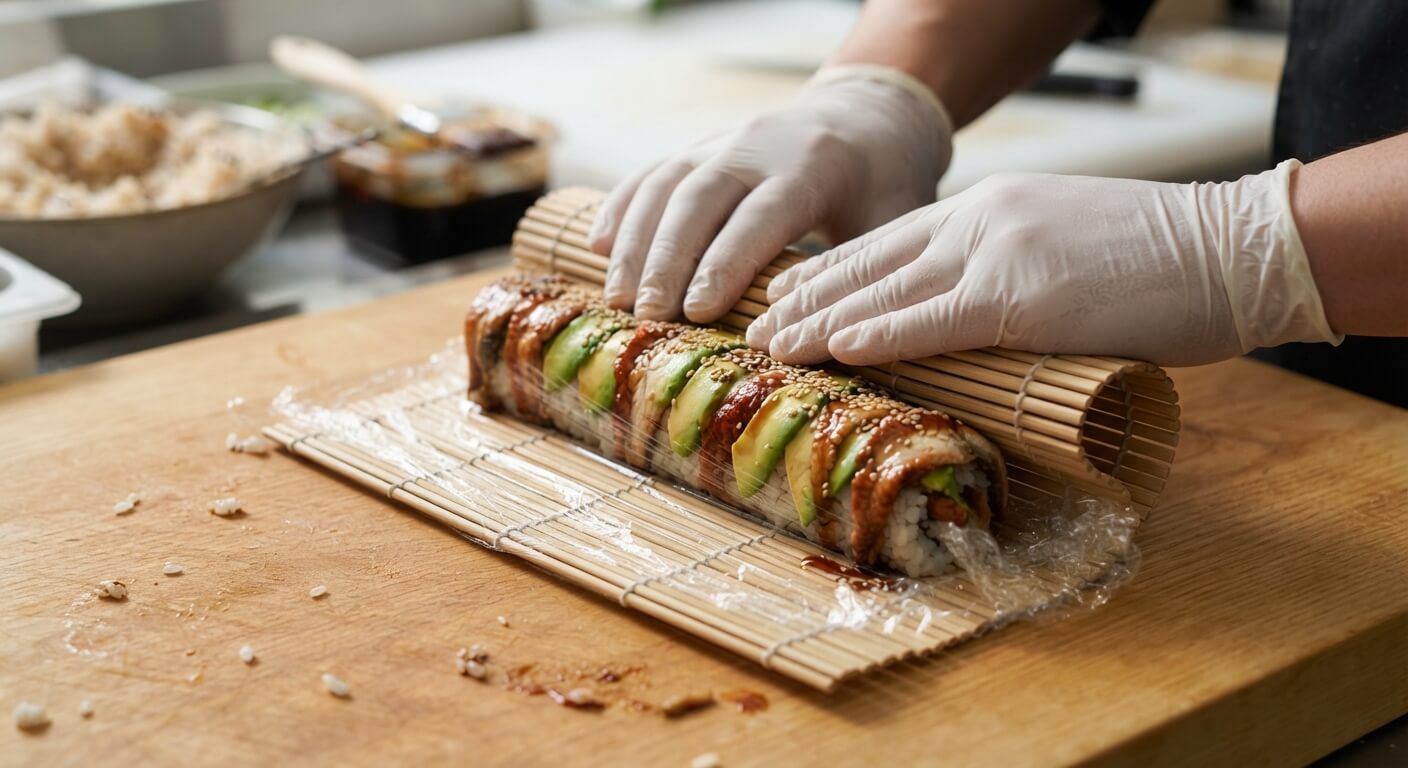
Photo to use: roll under plastic wrap with the mat pressing on it.
Step 9: Cut the dragon roll into 8 pieces
With the plastic still on, cut the roll in half. Cut each half in half, then cut each piece in half again. This gives you eight even pieces. Try not to slice through the extra plastic at the top. If you keep it whole, you can lift the wrap off in one go.
Wipe the blade with a damp towel between cuts. Wet the knife if rice starts sticking.
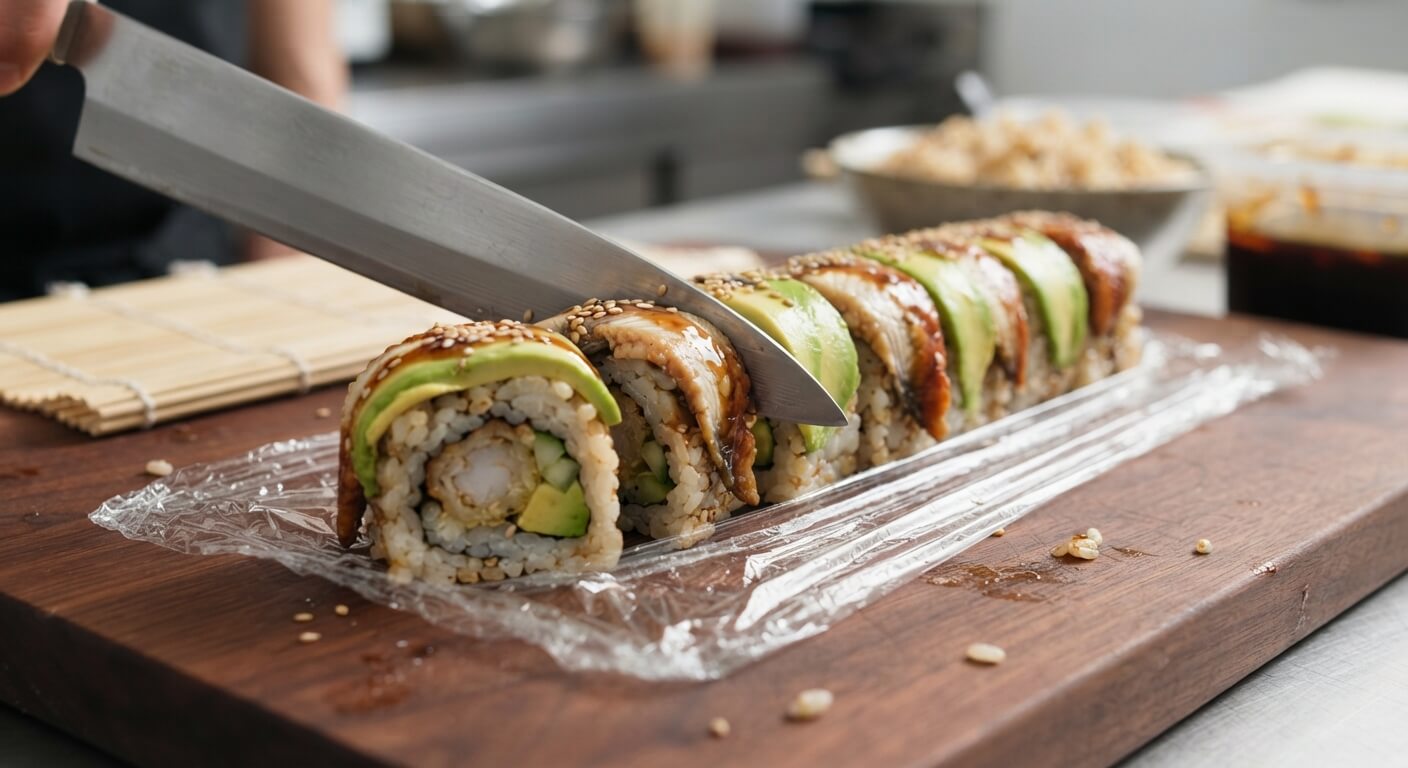
Photo to use: knife mid-cut, with the extra plastic visible above the roll.
Step 10: Plate, sauce, and garnish
Peel off the plastic wrap. Move the pieces to a plate. Drizzle with unagi sauce and spicy mayo, then add sesame seeds or tobiko. Serve right away, with soy sauce, wasabi, and pickled ginger on the side if you like.
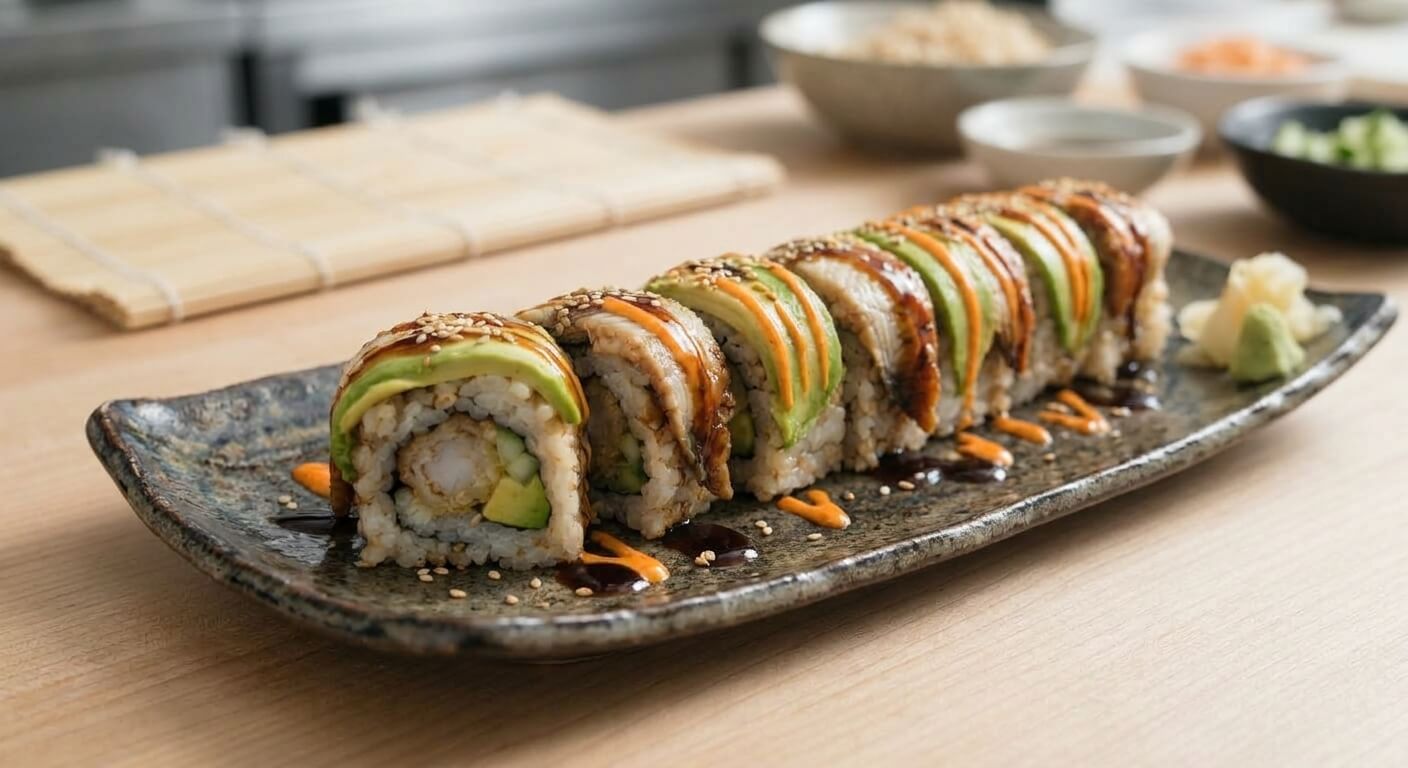
Photo to use: the finished plate, close-up, from a slight angle.
Common Problems and Easy Fixes
The roll falls apart. It was probably too loose or overfilled. Shrimp tempura is thick, so two pieces and a cucumber strip are plenty. Pull the mat back as you roll to tighten it.
Rice sticks to everything. Wet your hands before touching the rice. Wet and wipe your knife between cuts.
The toppings slide around. Slice the avocado and unagi thin, and use the plastic wrap to hold them in place while you cut.
The roll gets soggy. Seeds in the cucumber add water. Remove them if you use English cucumber. Also, do not let the tempura sit too long before you eat.
Avocado turns brown. Slice it just before you add it. If you have to wait, cover the slices tightly and keep them cold.
Dragon Roll Variations
- Unagi dragon roll: Follow the recipe above, with unagi on top. For an eel-filled version, put eel inside and top with avocado only.
- No-eel dragon roll: Skip the unagi and use avocado for the full topping. Add tobiko for color.
- Veggie version: Swap shrimp for sweet potato tempura or extra cucumber and avocado.
- Spicy crab version: Use cooked imitation crab mixed with spicy mayo instead of shrimp.
How to Serve and Store Dragon Roll Sushi
A dragon roll is best fresh. The tempura loses its crunch as it sits, and the rice gets firm in the fridge. Serve it right after you cut it.
If you have leftovers, refrigerate them within two hours of making the roll. Wrap tightly and eat within a day. Expect softer tempura and firmer rice.
For a sushi night, plan for about one roll for every two people, plus a few simple rolls to fill the table. This is a rough guide. Appetites vary.
Dragon Roll FAQs
Is a dragon roll raw?
No. The usual dragon roll has fried shrimp, cucumber, avocado, and sometimes cooked eel. None of it is raw fish. Some restaurants may add raw fish to their own version, so ask if you are ordering out.
What is inside a dragon roll?
Shrimp tempura and cucumber are the most common fillings. Avocado goes on top. Many versions also use cooked eel, tobiko, spicy mayo, and unagi sauce.
Can pregnant women or kids eat a dragon roll?
The ingredients are cooked, so it avoids the raw fish concern. Food safety still matters, so keep it cold if it will sit, and eat it fresh. Anyone who is pregnant should check with their doctor about specific foods.
Can I make a dragon roll ahead of time?
You can prep parts ahead, such as the rice, the sauces, and the cucumber. Cook the tempura, slice the avocado, and roll just before serving for the best taste and texture.
What rice should I use for sushi?
Japanese short-grain rice. It is sticky enough to hold the roll together and holds the vinegar seasoning well.
What sauce goes on a dragon roll?
Dragon rolls are commonly topped with unagi sauce and spicy mayo. Unagi sauce adds a sweet, savory flavor, while spicy mayo provides a creamy, slightly spicy finish.
Is a dragon roll healthy?
A dragon roll provides protein from shrimp and healthy fats from avocado. However, fried shrimp tempura, sushi rice, and sauces can increase its calories, fat, and sodium.
What is the difference between a dragon roll and a caterpillar roll?
A dragon roll typically contains shrimp tempura and cucumber, topped with avocado. A caterpillar roll often features cooked eel or other fillings, with overlapping avocado slices on top.
Final Thoughts
The best dragon roll recipe is the one you can repeat. Start with frozen shrimp tempura and a ripe avocado, keep the filling light, and take your time with the toppings. Your first roll may look a little messy, and that is fine. By the second or third, the scales start to line up. If you want to build your skills, try a simple California roll next, then come back to this one.
Suggested internal links: sushi rice recipe, spicy mayo recipe, unagi sauce recipe, shrimp tempura recipe, California roll recipe, how to roll sushi without a mat.

One comment