A recipe calls for mirin, dashi, and panko, and the nearest Asian market is an hour away. Japanese home cooking without an Asian grocery store is still doable, because most weeknight dishes depend on a short list of seasonings, and several of those sit on ordinary supermarket shelves. This guide covers Japanese cooking without Asian grocery store shopping trips: what to buy, what to swap, and what to cook first.
Can you cook Japanese food with regular grocery store ingredients?
Yes, and a lot of Japanese home cooking already works this way. One popular Japanese food blog calls the idea that this cuisine needs obscure ingredients and expert skills a misconception, and says six condiments are enough to start. Rice, eggs, chicken, cabbage, onions, and potatoes do most of the work. The seasonings give them their Japanese character.
A substitute gets you close to a dish, not identical to it. Two ingredients show the gap more than any others: miso, which has no real stand-in, and dashi, the stock under many soups and simmered dishes. Almost everything else forgives a swap.
Japanese Ingredients You Can Find at Regular Grocery Stores
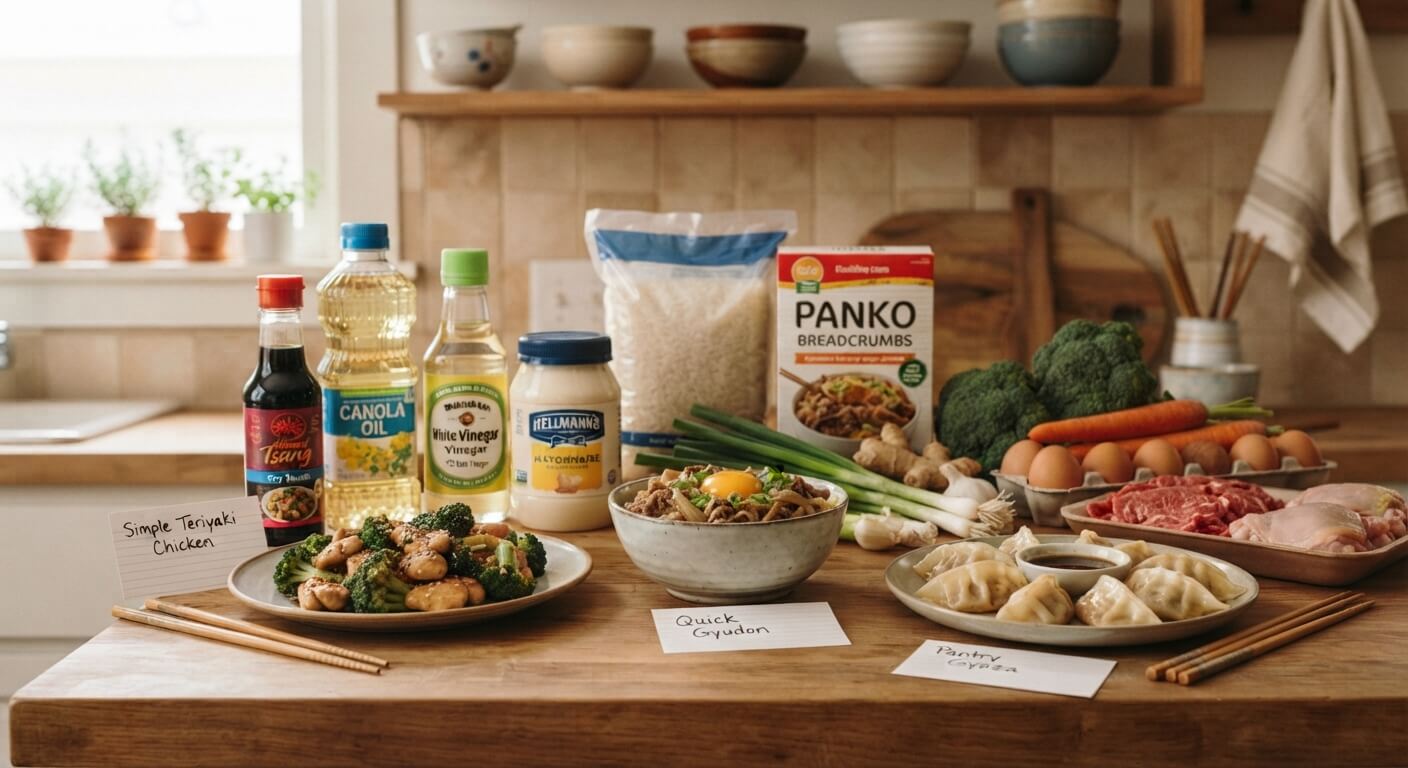
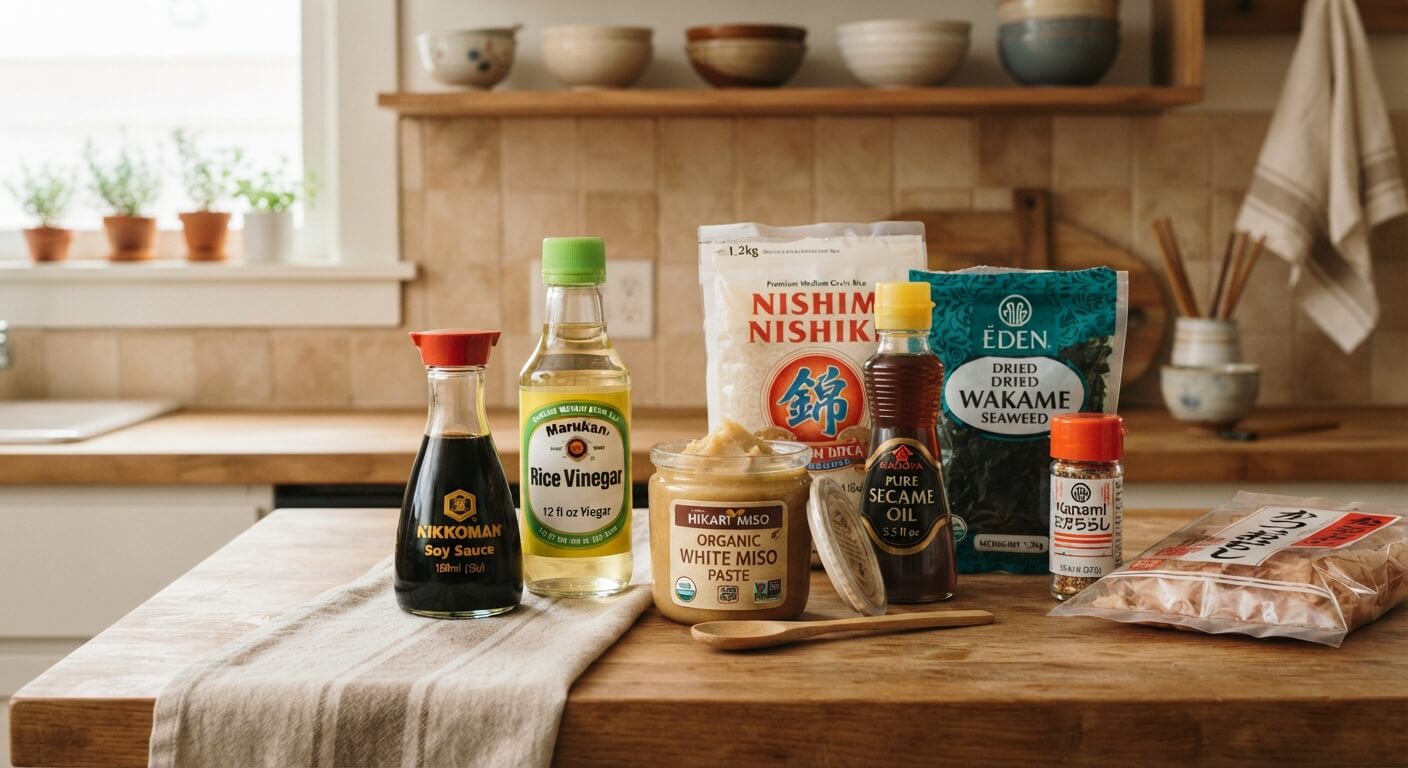
Check your supermarket’s international aisle before ordering anything online. It costs nothing, and some items turn up in unexpected places: panko often sits beside the regular breadcrumbs, rice vinegar is usually in the Asian aisle, and miso, when a store carries it, tends to be in the refrigerated section near the tofu. Larger stores like Whole Foods and local co-ops are the likeliest to stock it, but availability varies a lot.
Kikkoman is the soy sauce brand you’re most likely to find in a store that isn’t Asian-specific. Toasted sesame oil, wasabi, and dried noodles are common too. For rice, read the bag: you want “sushi rice” or “Japanese-style” medium or short grain, not “sweet” or “mochi” rice, which is a different product.
On Walmart (last checked November 20, 2026): Walmart’s site listed Mizkan and Kikkoman rice vinegar and several mirin options, including Kikkoman. A retail blog also says Walmart carries sushi rice. I couldn’t confirm miso paste, dashi, or panko at Walmart in the US. Stock and prices change by store and by day, so search the store’s website for your location before you go.
Japanese Pantry Essentials: What to Buy First
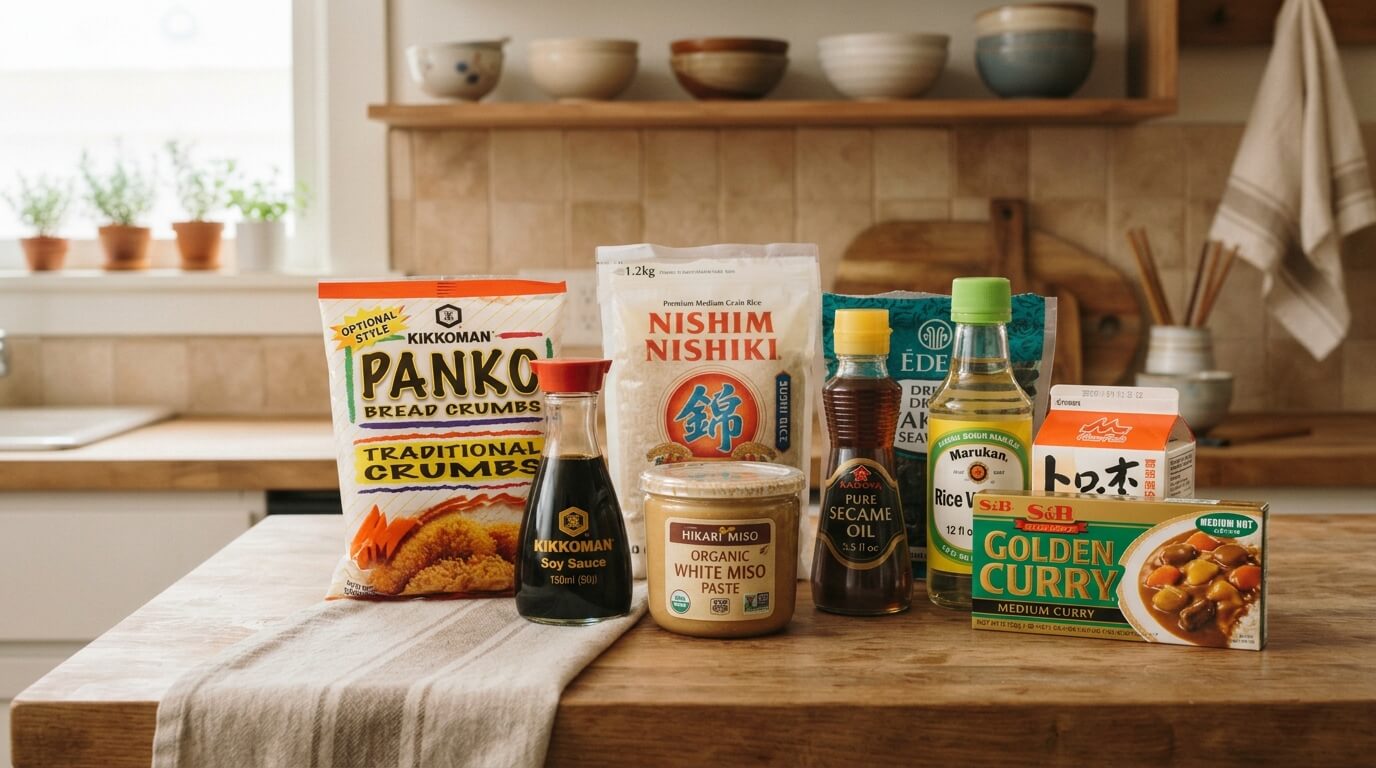
Buying every Japanese seasoning at once gets expensive fast. Start with the ingredients that work across several dishes, then add specialty items when a recipe asks for them.
If the budget is tight, buy soy sauce, rice vinegar, and sesame oil first. Together they cover fried rice, marinades, dressings, and dipping sauces, so they earn their shelf space faster than anything more specialized. Add sushi rice, sugar, and salt, and you can already cook a week of meals.
Miso and instant dashi powder come second, because they open up soups and simmered dishes, which the first group can’t do. Choose a dashi powder with no added salt if you can, so you control the seasoning. Real mirin and a cheap bottle of sake come last, once you notice recipes calling for them.
Real mirin vs mirin-style seasoning
The label matters. Hon mirin is the traditional product. “Aji-mirin” means “mirin-like” and is made from starch or glucose syrup, water, alcohol, rice, and salt, with about 8-14% alcohol and 2% salt according to Just One Cookbook. Some bottles sold as mirin outside Japan go further and are corn-syrup seasonings with under 1% alcohol. They still work in teriyaki and glazes, but they taste sweeter and flatter. A bottle labeled “hon mirin” or “real mirin” is the traditional one.
Japanese Ingredient Substitutes: What Works and What Doesn’t
The table is the quick reference. The sections after it cover limits and which swap to pick in which situation.
| Ingredient | Swap | What changes |
|---|---|---|
| Mirin | Sake or dry white wine plus sugar | Less depth, still sweet and glossy |
| Sake | Dry white wine, dry sherry, or Chinese rice wine; or water or broth | Sherry and rice wine taste stronger |
| Rice vinegar | Apple cider vinegar plus a little sugar | Slightly fruity |
| Japanese mayo | Regular mayo, rice vinegar, sugar | Less rich |
| Panko | Regular breadcrumbs | Less crunchy |
| Furikake | Sesame seeds, nori, salt, sugar | Homemade, no fish flavor unless you add it |
| Nori | Seasoned seaweed snacks | Works for crumbling, not for rolling |
| Ponzu | Soy sauce plus lemon or lime | Simpler flavor |
| Shiso | Perilla leaf from a Korean market | No herb really replaces it |
Mirin and sake
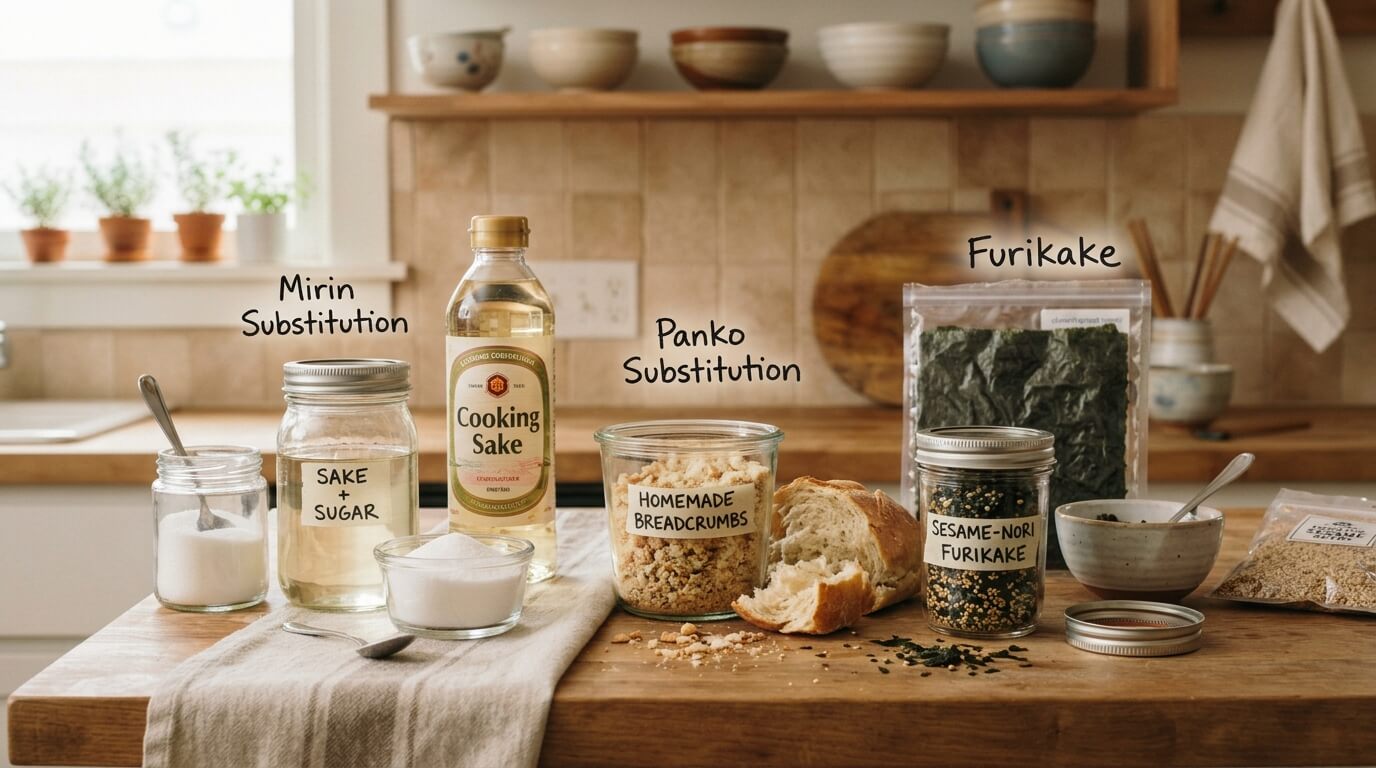
If you’re buying just one bottle of alcohol for Japanese cooking, make it a cheap, drinkable sake. Sake works as itself, and with a little sugar it stands in for mirin, so one bottle covers both jobs. Aim for roughly one part sugar to three parts sake or wine, and use honey if that’s what you have. Just One Cookbook says dry white wine can replace sake but not mirin, so keep the sugar in whenever mirin is the target.
Dry sherry and Chinese rice wine also replace sake, but their flavors are stronger. They hold up in braises and glazes, and they’re a poorer match for delicate dishes. Skip cooking sake if you can: it has salt added, so it comes out saltier than it looks.
Cooking without alcohol is less settled, and sources disagree. For sake, water or broth is the simplest swap, and kombu dashi with a pinch of salt adds umami. For mirin, check the label for a product sold as alcohol-free (one blog names Mizkan’s Honteri), or sweeten dashi or water with sugar for soups and simmered dishes. Some blogs suggest rice vinegar plus sugar, but Just Hungry warns that vinegar makes food sour. If you try it, go light.
Dashi and miso
Dashi powder is fine for a weeknight soup or stew. Where the shortcut matters is in dishes where dashi is the main flavor, like clear soups or steamed egg custard. There, buy proper powder or make the stock, because nothing else fills the gap. Dishes like fried rice, teriyaki, and katsu don’t need dashi at all, so skip the worry there.
Japanese cooks don’t normally replace dashi with chicken or vegetable stock in traditional dishes. Stock tastes fine in a stew, but it will read as a different dish. If you’re stuck for one dinner, simmering dried shiitake mushrooms in water gives a savory broth. Treat it as a stopgap, not as dashi.
For miso, there’s no swap I’d recommend. A tub keeps well in the fridge, so one order covers months of soup. If you cook with it, add it near the end, since long boiling dulls the flavor.
Rice vinegar
Apple cider vinegar works one-to-one, and a quarter teaspoon of sugar per tablespoon brings it closer to rice vinegar’s sweetness. Use it in dressings and sauces. For sushi rice or quick pickles, its fruitiness shows, so use rice vinegar there if you can. White wine vinegar with a pinch of sugar is the next choice.
Japanese mayo
Kewpie-style mayo is richer because it’s made with egg yolks instead of whole eggs, and no add-in fully reproduces that. But a spoonful of rice vinegar and a pinch of sugar stirred into regular mayo gets you closer for egg sandwiches and potato salad.
Published ratios range from 2 tablespoons of vinegar and 1 tablespoon of sugar per cup down to about 1 tablespoon of vinegar and 2 teaspoons of sugar per cup. Start at the low end, 1 tablespoon of vinegar and 1 teaspoon of sugar per cup, then taste and add more if you want it tangier or sweeter. That’s my starting point, not a tested formula.
Panko
If regular breadcrumbs are all you have, use them for chicken katsu rather than putting dinner off. The coating will be denser and less crunchy than panko’s light, airy flakes, which absorb less oil, but it still makes a good cutlet. If you want to get closer, grate or pulse bread and dry the crumbs on a baking sheet in a low oven. Don’t use flour. A Sudachi Recipes post warns that flour gives a completely different result.
Furikake and nori
Furikake takes five minutes to make. One blogger uses 4 tablespoons of toasted white sesame seeds, 2 tablespoons of toasted black sesame seeds, 2 nori sheets, 1 teaspoon of sugar, and half a teaspoon of salt. If you can’t find nori sheets, seasoned seaweed snacks crumble over rice nicely, though they won’t work for rolling.
Japanese curry roux
A boxed roux is the easy route if you can find one. Homemade is worth the 30 minutes when you can’t, and it lets you control the salt and heat. Just One Cookbook’s version cooks equal weights of butter and flour to golden brown, then stirs in Japanese curry powder, garam masala, and optional cayenne. Cook it low and keep stirring, because it burns easily. Homemade roux is unsalted, so season the finished curry. Made ahead, it keeps in the fridge for a month or in the freezer for three to four months.
A faster Wandercooks version uses butter, flour, curry powder, tomato paste, garlic salt, and honey, and takes about 15 minutes.
Rice
Sushi rice or medium-grain rice like Calrose is the right buy. Calrose works in a pinch for sushi. Long-grain rice is a different story: it won’t stick enough to shape for sushi or onigiri, though it’s fine for fried rice and rice bowls.
Japanese Recipes You Can Make With Everyday Ingredients
These are frameworks, not tested recipes. Adjust sweetness and salt to your taste.
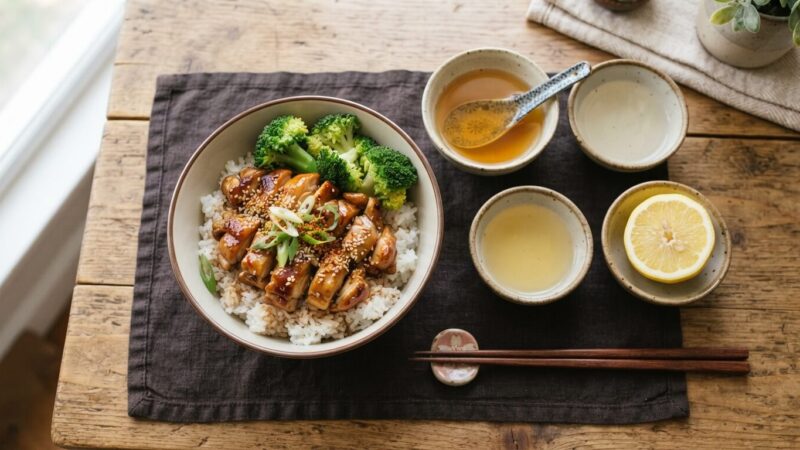
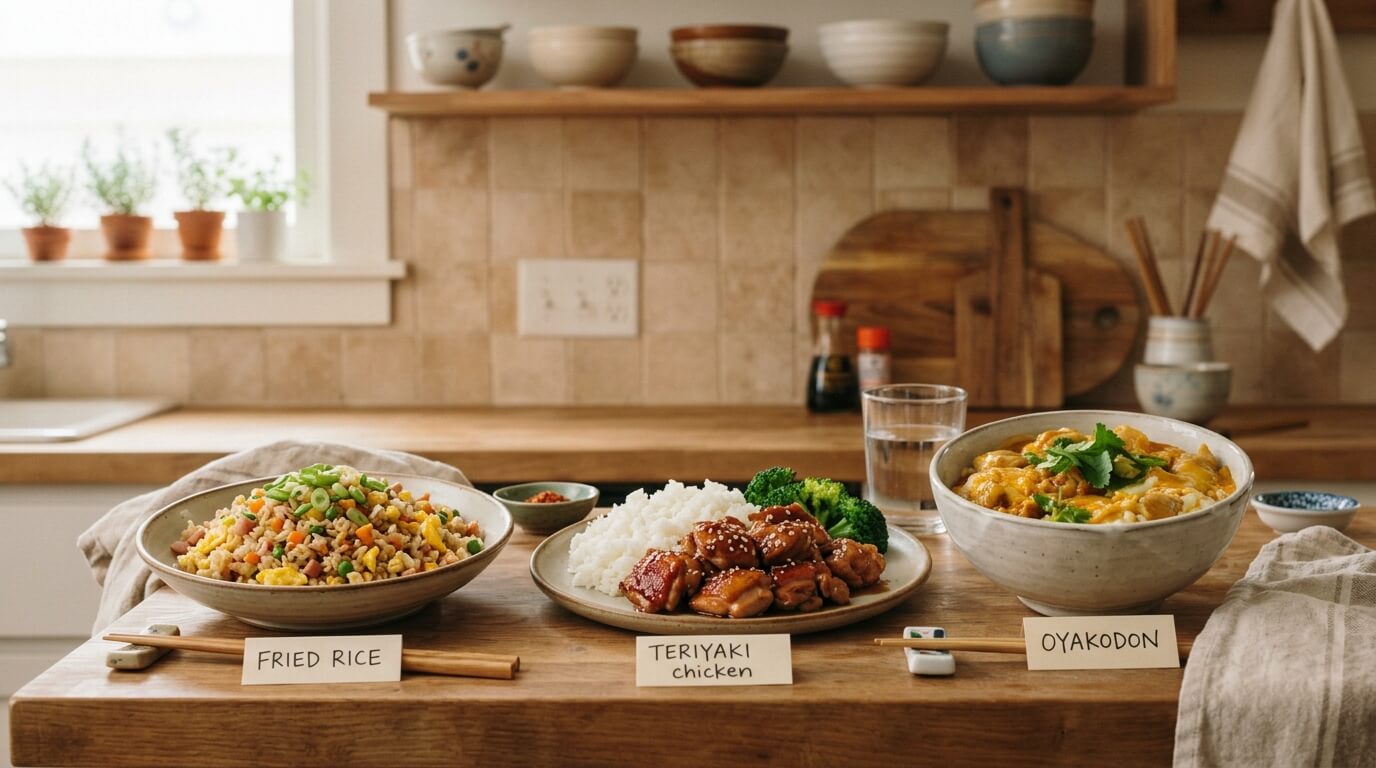
Teriyaki chicken is the easiest place to start. Pat boneless thighs dry so they brown, then add soy sauce, a splash of sake or white wine, and sugar, and simmer until the sauce clings. Serve over rice.
Oyakodon means “parent and child,” and the traditional version uses chicken and egg. Simmer sliced chicken and onion in dashi, soy sauce, and sugar, pour beaten egg over, cover until just set, and slide it over rice. A beef version is a different dish, called gyudon.
Fried rice needs no specialty ingredients. Use day-old rice, since freshly cooked rice turns mushy in the pan, then add egg, scallion, whatever protein you have, soy sauce, and a splash of sesame oil.
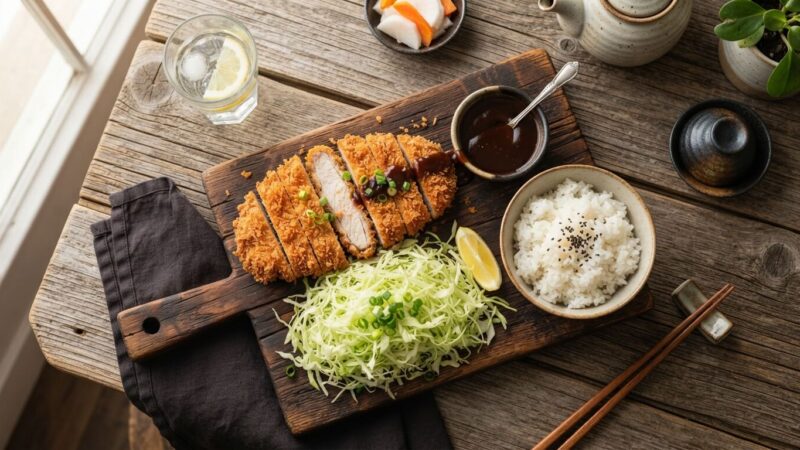
Chicken katsu works with panko or regular breadcrumbs: flour, egg, then crumbs, pan-fried. In place of bottled tonkatsu sauce, America’s Test Kitchen suggests ketchup, Worcestershire, Dijon mustard, and soy sauce.
Tuna mayo onigiri is tuna and mayo inside a rice ball. Shape it while the rice is still warm so it holds together, and don’t season the rice with vinegar and salt, or it becomes sushi, not onigiri. It needs short- or medium-grain rice.
Sesame cucumber salad is a good first use for rice vinegar: sliced cucumber, rice vinegar, soy sauce, sugar, and toasted sesame.
Omurice, ketchup fried rice wrapped in an omelet, comes from staples you probably already have.
Noodles from instant ramen or udon blocks go well in a stir-fry with cabbage and carrot, seasoned with soy sauce and a pinch of sugar. Drop the flavor packet. It’s a loose take on yakisoba, not the real thing.
Miso soup is dashi, miso, tofu, and scallions, and it’s the one dish where the swaps above won’t help. Keep miso and dashi powder on the list.
Where to Buy Japanese Ingredients Online and Locally
Start with the international aisle, then go online for what’s missing. Just One Cookbook keeps a resource page of online shops that offer a wide range of Japanese and Asian ingredients, and Amazon is the easiest marketplace for many of them. A Korean or Chinese market is worth a stop too, since perilla leaf, the closest thing to shiso, is sold at Korean grocery stores. Large chains keep adding Japanese items, so recheck your usual store every few months.
Related Reading
- Dragon Roll Recipe: How to Make Dragon Roll Sushi at Home
- Sake Substitute for Halal Cooking: 7 Alcohol-Free Alternatives
- Best Panko Substitute for Gluten-Free Tonkatsu and How to Use It
FAQ
What Japanese ingredients should beginners buy first?
Soy sauce, rice vinegar, and toasted sesame oil, then sushi rice, sugar, and salt. Those cover fried rice, dressings, and marinades. Miso and dashi powder come next, once you want soups.
Can I use regular rice instead of Japanese rice?
Long-grain rice like basmati or jasmine works for fried rice and bowls, but not for sushi or onigiri. Medium-grain Calrose is the closest common option, and brands like Nishiki are often sold as sushi rice.
What is the easiest substitute for mirin?
Sake or dry white wine with sugar. For no alcohol, look for a product labeled alcohol-free or sweeten dashi or water with sugar. Whichever you use, taste the sauce at the end.
Can I make Japanese food without dashi?
Yes, for dishes like fried rice, teriyaki, and katsu, which don’t use it. Soups and simmered dishes need dashi powder or packets to taste right, and stock is a stand-in, not an equal.
Is miso paste available at regular grocery stores?
Sometimes. Check the refrigerated section near the tofu, especially at Whole Foods and co-ops. If yours doesn’t carry it, one tub bought online lasts months.
Can I make Japanese curry without store-bought roux?
Yes. Cook butter and flour in equal weights until golden, then add curry powder and garam masala. Salt the finished dish, since homemade roux has none.
What Japanese dishes are easiest to make at home?
Fried rice, teriyaki chicken, oyakodon, and sesame cucumber salad. Pick whichever uses seasonings you already own and cook it first.
How to Start Cooking Japanese Food at Home
Pick one dish from the list above and buy only what it needs. If it’s teriyaki chicken or fried rice, soy sauce, sugar, and sesame oil are enough. Add miso and dashi powder after a few meals, once you know what you want to cook more often. Check retailer details, like what’s on the shelf at Walmart, before you shop, since they change.
Sources
- Japanese Ingredient Substitutes – Chef Jacooks
- Ingredient Substitution for Japanese Cooking – Just One Cookbook
- 6 Must-Have Condiments – Just One Cookbook
- Mirin – Just One Cookbook
- Japanese Ingredient Substitutes – Sudachi Recipes
- About Japanese Ingredients and Substitutions – Just Hungry
- Rice Vinegar – Pickled Plum
- Japanese Kewpie Mayonnaise – Just One Cookbook
- Panko – Just One Cookbook
- Japanese Curry Roux – Just One Cookbook
- Easy Homemade Japanese Curry Roux – Wandercooks
- Furikake – Drive Me Hungry
- Crispy Pan-Fried Chicken Cutlets – America’s Test Kitchen
- Which Rice to Use for Onigiri – Bite My Bun
- Choosing, Storing, and Cooking Rice for Japanese Dishes – University of Illinois
- Online Shops for Asian Ingredients – Just One Cookbook
- Walmart: Mizkan Rice Vinegar