Regular panko is made from wheat bread. If you avoid gluten, it’s off the table, and that’s a real problem for tonkatsu, where the crumb coating is half the appeal.
The best panko substitute for gluten-free tonkatsu is a gluten-free panko made from rice flour. It has the same light, flaky shape as wheat panko, and you use it the same way. If you can’t find it, the strongest backups are toasted crumbs made from gluten-free bread and coarsely crushed plain cornflakes labeled gluten-free.
This guide covers how each option behaves in hot oil, where each falls short, and the breading steps that matter as much as the crumb. These recommendations are based on how each ingredient is built and what recipe developers and food writers report. They do not come from a side-by-side cooking test.
Why Panko Matters So Much in Tonkatsu
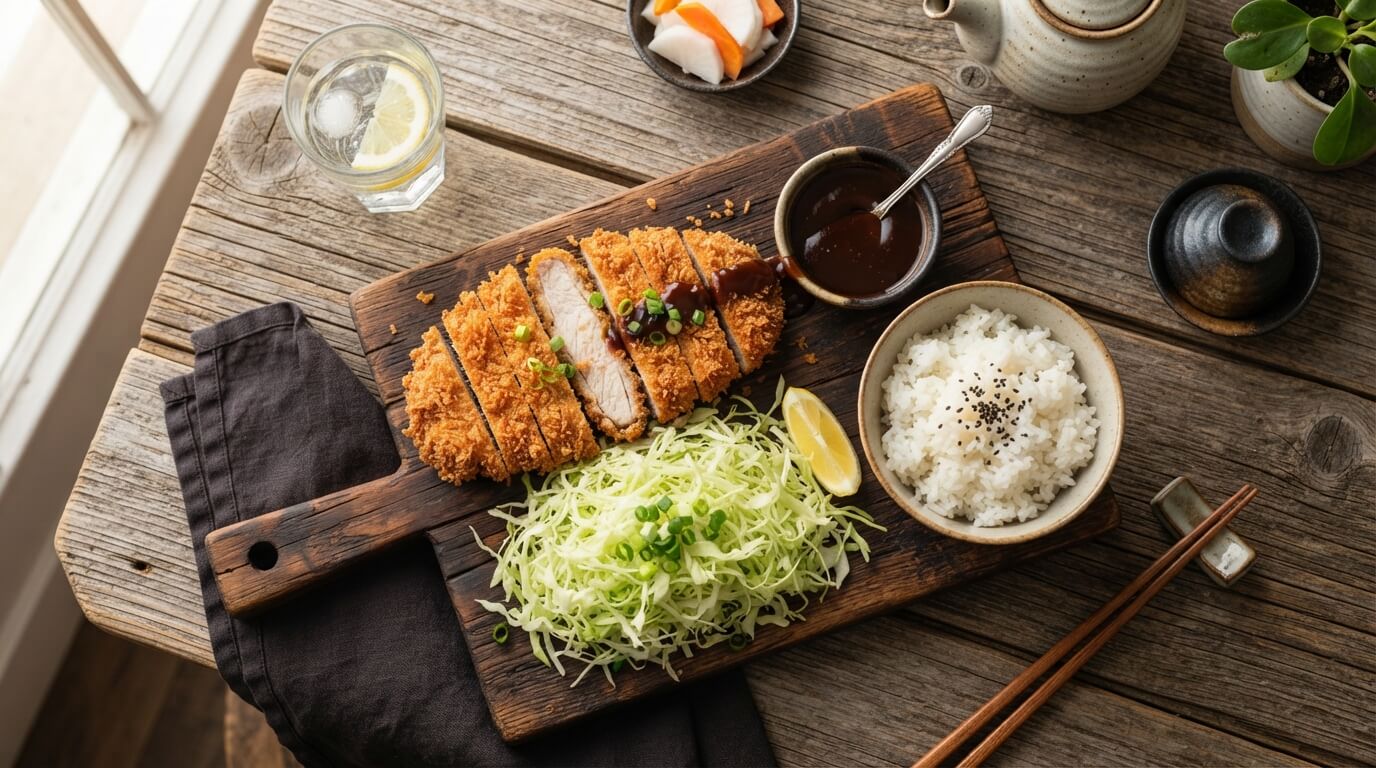
Panko isn’t just breadcrumbs with a Japanese name. Its flakes are larger and airier than ordinary dry crumbs. That gives the coating a light, shattery crunch, and the coating soaks up less oil. It’s the reason a panko-crusted pork cutlet tastes crisp rather than greasy.
Most gluten-free swaps miss in one of two ways. Some are ground too fine, so the crust turns sandy or dense. Others are too dry or too slick to stay on the meat.
A good substitute gets reasonably close on flake size. Your breading method has to cover the rest. That’s why the cooking steps later in this guide deserve as much attention as the ingredient you pick.
Gluten-Free Panko Substitutes Compared
Here’s a quick look at how the main options stack up for frying a pork cutlet.
|
Option |
What to expect |
Stays on the cutlet? |
Best for |
|---|---|---|---|
|
Gluten-free panko (rice-based) |
Light and flaky, closest to the original |
Fairly well, a bit less than wheat panko |
Anyone who can find it |
|
Homemade gluten-free bread crumbs |
Crisp and toasty; texture depends on the bread |
Well |
Cooks who want control over ingredients |
|
Crushed plain gluten-free cornflakes |
Very crunchy, slightly sweet, browns fast |
Well |
A last-minute pantry fix |
|
Crushed rice crackers or rice cereal |
Dry, light crunch |
Fairly well |
Keeping a Japanese flavor |
|
Crushed pork rinds |
Crunchy, savory, porky |
Well |
Low-carb and keto eaters |
|
Almond flour or almond meal |
Fine, rich, browns easily |
Well, but dense |
Grain-free cooking where crunch matters less |
Rice-Based Gluten-Free Panko: The Closest Match
If you want the least work, buy a gluten-free panko. Several brands make one. Kikkoman’s gluten-free panko is unseasoned and made from rice flour, dextrose, and pea protein, with no wheat. Ian’s, Aleia’s, Jeff Nathan, and Kinnikinnick also sell gluten-free panko-style crumbs. Some Japanese brands make rice-flour panko with a light, crackly texture that’s a little different from the wheat version.
Expect some variation between brands. Different gluten-free flours fry differently, and reviewers who compare them don’t agree on a single winner. Start with one brand, and switch if the texture doesn’t suit you.
Rice-based panko also grips the meat a little less firmly than wheat panko. One food-service guide suggests stirring about a teaspoon of rice starch into the egg wash to help it cling. It’s an easy fix, and it costs almost nothing to try.
What to Check on the Label
Look for a clear “gluten-free” label. If you have celiac disease, look for a certification too. Some companies, including 4C and Kikkoman, make both wheat-based and gluten-free panko, so the brand name alone doesn’t tell you which one you’re holding.
Homemade Gluten-Free Bread Crumbs That Fry Like Panko
Store-bought gluten-free breadcrumbs are usually ground fine, and fine crumbs rarely give you panko’s crunch. Making your own from gluten-free bread gets much closer. It’s also a good use for the stale slices and heels that tend to pile up.
- Dry the bread. Leave slices out overnight, or bake them at a low temperature until they feel like crackers.
- Break it into flakes. Tear the bread by hand or pulse it in a food processor only a few times. You want uneven flakes, not powder.
- Toast the crumbs. Spread them on a baking sheet and toast until light golden, stirring once or twice.
- Cool them completely. Warm crumbs go soft fast once they hit the egg.
Homemade crumbs keep for a few days in an airtight container. They’re unsalted, so you control the seasoning.
Pantry Backups When You Don’t Have Panko
No gluten-free bread or panko on hand? These cupboard staples can still coat a cutlet, though each one brings its own texture and flavor.
Plain Gluten-Free Cornflakes
Cornflakes are one of the most common gluten-free stand-ins for panko, and you can usually use them in about the same amount. Choose plain, unsweetened flakes and crush them coarsely so some visible pieces remain. A long run in the blender or a push through a fine sieve will turn them to dust.
Read the box first. Some regular cornflakes contain barley malt, which has gluten, so buy a brand labeled gluten-free. Cornflakes also brown faster than panko. Keep the oil at a steady heat and watch the first cutlet closely.
Rice Crackers or Puffed Rice Cereal
Plain, unflavored rice crackers or puffed rice cereal give a dry, light crunch that fits the Japanese flavor of the dish. Crush them in a zip-top bag with a rolling pin, leaving some pieces larger.
Rice crumbs bind a little less well than wheat crumbs. Press them on firmly and let the coated cutlet sit for a few minutes before it goes into the oil.
Pork Rinds, Almond Flour, and Other Options
Crushed pork rinds make a grain-free coating, which is why many low-carb and keto cooks like them. They taste clearly of pork and are often salty already, so go easy when seasoning the meat.
Almond flour or almond meal gives a richer, denser crust. It browns easily, so it does better over moderate heat than in a hard, hot fry.
Some cooks use crushed corn tortilla chips or dry potato flakes. Both can work. Tortilla chips bring their own salt and sometimes seasoning, and potato flakes make a thicker, more floury coat. If you try either, check the label for added flavors and gluten.
How to Make Gluten-Free Tonkatsu Crispy
The crumb you choose matters, but these steps decide how the finished cutlet turns out. Most problems with gluten-free breading, like coatings that slide off or turn soggy, come from skipping one of them.
- Pat the pork dry. Surface moisture is the main reason coatings fall off. Season the meat with salt and pepper.
- Dust with gluten-free flour. Rice flour, a gluten-free all-purpose blend, or cornstarch all work. Shake off the extra so only a thin layer is left.
- Dip in beaten egg. If you’re using rice-based crumbs, add a small spoonful of rice starch to the egg.
- Press the crumbs on firmly. Use your palm, then rest the cutlet on a rack for 5 to 10 minutes so the coating can set.
- Fry at a steady temperature. Around 170 to 175°C (340 to 350°F) is a common target for tonkatsu. Fry one cutlet at a time so the oil doesn’t cool down. Leave it alone for the first minute or two before turning so the crust can firm up.
- Drain on a wire rack. Paper towels trap steam under the cutlet and soften the bottom. A rack lets air reach both sides.
Baking or Air-Frying Instead
If you plan to bake or air-fry, toast the crumbs first. Several Japanese recipe sites suggest toasting panko in a dry pan so it turns golden without deep frying. Tossing the crumbs with a spoonful of neutral oil is another recipe-tested trick for better browning in an air fryer.
Gluten-free baked tonkatsu recipes usually cook the breaded pork chops in the oven for around 20 minutes, using toasted crumbs and a little oil for color. The crust won’t match a deep-fried one, but it’s a lighter way to cook.
Keep the Rest of the Plate Gluten-Free
A gluten-free crumb doesn’t make the whole meal gluten-free. Regular soy sauce contains wheat, so use tamari or a soy sauce labeled gluten-free. Worcestershire sauce varies by brand, and many bottled tonkatsu sauces include wheat-based ingredients. Read labels, or make your own sauce from ketchup, gluten-free Worcestershire, tamari, and mirin.
If you’re cooking for someone with celiac disease, watch for cross-contamination. Oil that has already fried regular panko is no longer gluten-free, so start with fresh oil in a clean pot or pan. This is general cooking information, not medical advice. Anyone with celiac disease or a serious allergy should follow their doctor’s guidance.
Common Questions About Gluten-Free Tonkatsu
Can you make tonkatsu without panko or breadcrumbs at all?
Yes. Crushed rice crackers, pork rinds, cornflakes, or almond flour can all coat a pork cutlet. The texture changes, but the breading method stays the same.
Why does my gluten-free coating fall off?
The usual causes are damp meat, too much loose flour, and crumbs that weren’t pressed on firmly. Dry the pork well, shake off the excess flour, and let the cutlet rest before frying.
Do gluten-free crumbs stay crisp as leftovers?
Not as well as when fresh. Reheat on a rack in a hot oven or in an air fryer. The microwave will soften the crust.
Which Gluten-Free Panko Substitute Should You Pick?
For most cooks, rice-based gluten-free panko is the best choice. It’s the closest to the original in shape and needs no prep. If you can’t find it or would rather not pay for it, toast your own gluten-free bread crumbs. Plain gluten-free cornflakes are the best last-minute option.
Pork rinds and almond flour make more sense when a diet like low-carb eating comes first and a perfect panko match isn’t the goal.
Whichever crumb you choose, dry the pork, keep the flour coat thin, rest the breaded cutlet, and hold the oil steady. Those steps will do much of the work for you.
Sources
- Kikkoman, Gluten-Free Panko: https://kikkomanusa.com/products/gluten-free-panko/
- My Pure Plants, “Is Panko Gluten Free?”: https://mypureplants.com/is-panko-gluten-free/
- Julie’s Cafe Bakery, gluten-free panko roundup: https://juliescafebakery.com/?p=5323
- Peel with Zeal, gluten-free bread crumb brand comparison: https://peelwithzeal.com/best-gluten-free-bread-crumbs-brands
- Flavorful Home, panko substitutes: https://flavorfulhome.com/panko-substitute/
- Texas Real Food, gluten-free breadcrumb alternatives: https://discover.texasrealfood.com/swap-and-savor/how-to-substitute-panko-breadcrumbs-for-regular-breadcrumbs
- KitchenNmbrs, panko product knowledge (rice panko adhesion, fryer cross-contamination): https://kitchennmbrs.app/en/product-knowledge/potatoes-grains-cereals/panko
- Just One Cookbook, baked tonkatsu (toasting panko): https://www.justonecookbook.com/recipes/baked-tonkatsu/
- Domestic Dreamboat, air-fryer tonkatsu (oil with panko, gluten-free swaps): https://domesticdreamboat.com/air-fryer-tonkatsu/
- Gluten Free & More, gluten-free baked tonkatsu: https://glutenfreeandmore.com/blog/2020/10/gluten-free-baked-tonkatsu.html
- Great Curry Recipes, tonkatsu frying temperature: https://greatcurryrecipes.net/all-blog-posts/page/14/
- Bite My Bun, panko substitutes (pork rinds): https://www.bitemybun.com/best-panko-breadcrumbs-substitutes